
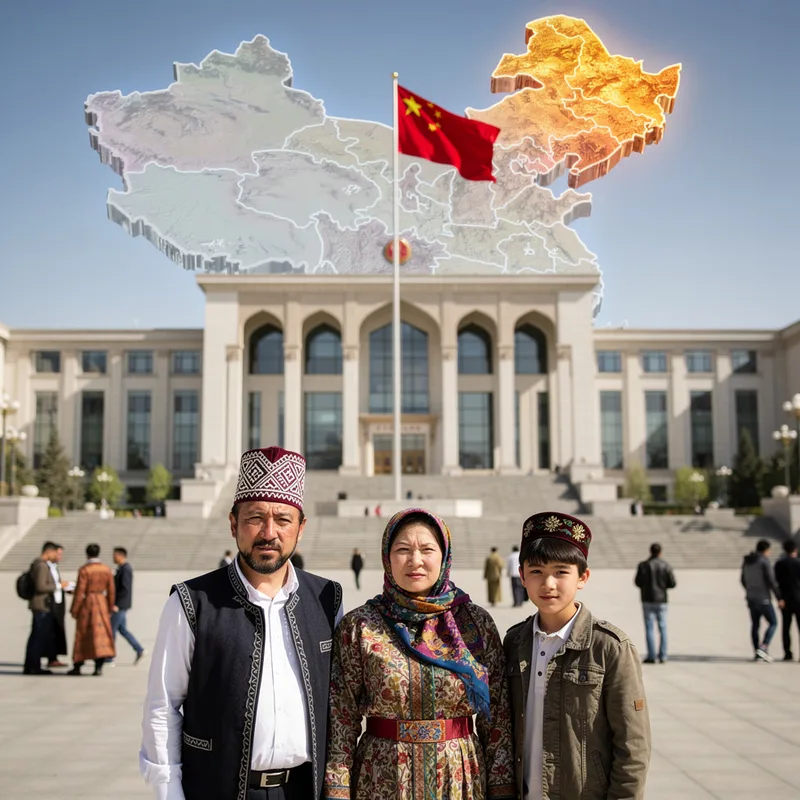
Xinjiang
 4
6.9
4
6.9

- proper noun
- /ˈʃɪnˈdʒæŋ/
- With the necessary permissions, Mair started taking Western researchers to Xinjiang in 1993.
- Xinjiang region
- Xinjiang Province
- Xinjiang Autonomous
Loading YouTube…
Watch on YouTubeThey've got people in concentration camps in in Xinjiang.
- They've got people in concentration camps in in Xinjiang.
- So this is an example where, you know, it's not just China saying to us shut up about Xinjiang.
- So there's been censorship and there's also been propaganda about the prosecution, like of Uyghurs in Xinjiang.
Examples
-
As it stands, Xinjiang accounts for less than seven percent of China's oil production.
Academic text (1996) -
China is fighting an insurgency in the oil-rich Xinjiang Uygur Autonomous Region.
Academic text (2000) -
A second strain has followed the same route and then continued up to Xinjiang, China.
Academic text (2005) -
Exiled to the remote desert region of Xinjiang, he was forbidden to write.
Academic text (2015) -
Many Uyghurs have long dreamed of separating from China and transforming Xinjiang into an independent state.
Academic text (2010) -
The discoveries created a controversy in Xinjiang, a region that was churning with ethnic unrest.
Academic text (2010) -
China continues to worry that instability to its west could foment unrest in its Muslim region, Xinjiang.
Academic text (2005) -
Tibet and Xinjiang are the only provinces where minorities continue to outnumber the Han Chinese.
Academic text (1991) -
Unrest among the Muslim Uighurs in Xinjiang and among the Tibetans could flare up and spread to the Han Chinese homeland.
Academic text (2011) -
Many tourists visit Kashgar, which is known as the cultural heart of Xinjiang, to experience its unique history and traditions.
Synonyms

 1
9.1
1
9.1
A region in far northwest China that has its own local government and is home to the Uighur people

A region in far northwest China that is home to many Uighur people
Compounds
A region in far northwest China that is home to many Uighur people
Surface Forms
Etymology
Xinjiang comes from Chinese parts xin meaning 'new' and jiang meaning 'border' or 'frontier'. So the name literally means 'new frontier', which helps remember it is a large border region in northwestern China and the traditional homeland of the Uighur people.