

Xanthosoma sagittifolium
- noun
- Specialized
- The tubers of Xanthosoma sagittifolium can be prepared in much the same way as potatoes.
Examples
-
Xanthosoma sagittifolium is cultivated in many tropical countries as a root vegetable.
-
Many Caribbean dishes use Xanthosoma sagittifolium as a staple ingredient.
-
The Xanthosoma sagittifolium is commonly known as malanga.
-
Many people enjoy cooking Xanthosoma sagittifolium as a substitute for potatoes.
-
Xanthosoma sagittifolium is used in traditional dishes across the Caribbean and is often boiled or fried.
-
In many tropical regions, Xanthosoma sagittifolium is an important source of carbohydrates and is enjoyed in various recipes.
-
Chefs appreciate Xanthosoma sagittifolium for its versatility, as it can be roasted, mashed, or sauteed like yams.
Synonyms
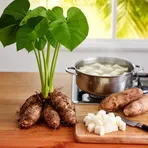


 1
9.9
A tropical plant with starchy roots that people cook and eat like potatoes
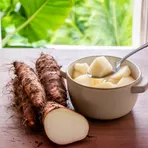 1
9.9
A tropical plant with starchy roots cooked like yams or potatoes
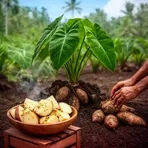
A tropical American plant with large edible tubers cooked like yams

A tropical plant with edible tubers cooked like yams or potatoes
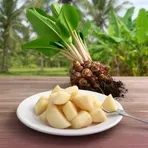
A tropical plant with thick roots you eat cooked like potatoes
Surface Forms
Morphology
Xanthosoma + sagittifolium
This is a scientific Latin binomial (genus + species) serving as a taxonomic name rather than a compositional English phrase; its everyday meaning ('malanga', an edible tuberous plant) is not inferable from the parts. The second element 'sagittifolium' is a Latin form not part of B1 learners' vocabulary, so even knowing the genus label would not allow a learner to derive the common edible-plant sense.
Etymology
Xanthosoma sagittifolium comes from old Greek and Latin words: xantho- means 'yellow', -soma means 'body', and sagittifolium means 'arrow-shaped leaf'. So the name gives a picture of a plant with a yellowish body and arrow-like leaves, and that image helps you remember this tropical root vegetable.