
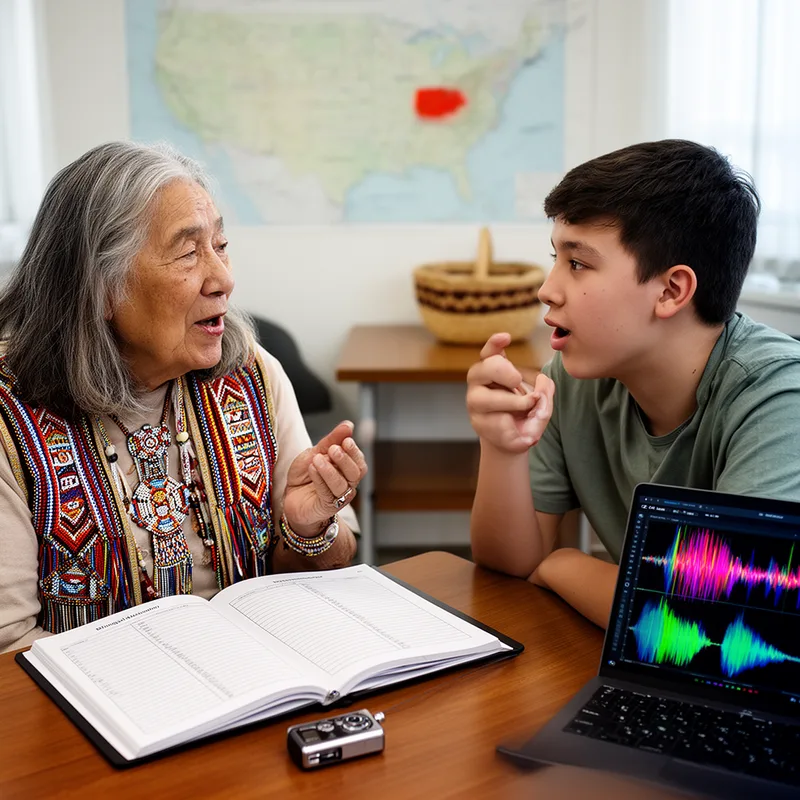
Winnebago language
- noun
- /ˈwɪnəˌbeɪɡoʊ ˈlæŋɡwɪdʒ/
- He is learning the Winnebago language to reconnect with his cultural heritage.
Examples
-
The Winnebago language is part of the Siouan family.
-
Linguists have documented endangered features of the Winnebago language spoken in Wisconsin.
-
A bilingual dictionary was published for the Winnebago language and English.
-
Many students are learning the Winnebago language in school.
-
A bilingual dictionary was published for the Winnebago language and English.
-
He is learning the Winnebago language to reconnect with his cultural heritage.
-
Many students are learning the Winnebago language in school.
Synonyms
A native language of the Ho-Chunk people in Wisconsin
Surface Forms
Morphology
This is a transparent compositional phrase: knowing 'Winnebago' as the name of a people/place and 'language' as a system of speech allows a learner to infer it denotes the language spoken by the Winnebago. The 'X language' pattern is a regular, cross-linguistic naming convention, so a B1 learner who knows both constituents will readily understand the meaning.
Etymology
Winnebago language takes its name from an old name outsiders used for the Ho-Chunk people, Winnebago, while the people themselves call their language 'Ho-Chunk'. 'Ho-Chunk' is often said to mean 'people of the sacred language' or 'people of the big voice', so the phrase simply refers to the language spoken by that community today.

