
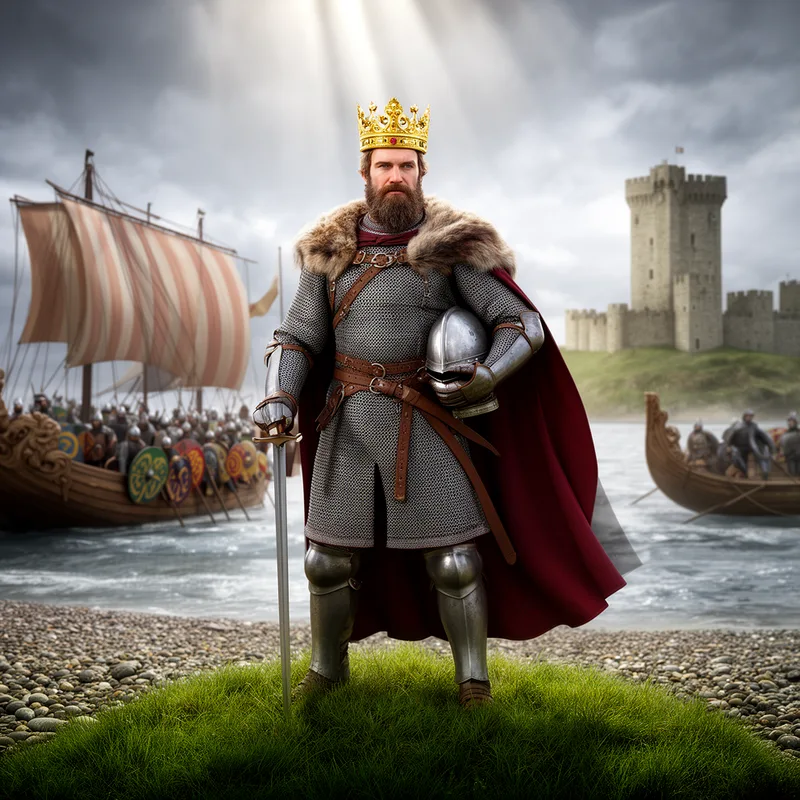
William the Conqueror
 3
7.9

- proper noun
- There is, however, an account of a Clough who came to England with William the Conqueror.
Examples
-
King William the Conqueror, known for his military prowess, became the first Norman King of England after defeating Harold II at the Battle of Hastings.
-
In 1066, William the Conqueror led the Norman invasion and forever changed the course of English history.
-
William the Conqueror established a strong foundation for the English monarchy after his victory in the pivotal Battle of Hastings.
Synonyms


 1
6.7
The first Norman king of England who invaded and conquered it in 1066
Surface Forms
Morphology
William + the + conqueror
The phrase is compositionally transparent: 'William' is a personal name and 'the conqueror' labels him as a person who conquered, so a learner who knows 'conqueror' and recognizes 'William' as a name can infer it refers to a William famous for conquest. This epithet structure (Name + the + role/epithet) is common cross-linguistically, so B1 learners can grasp the basic meaning even without historical details.
Etymology
William the Conqueror is called that because he led the Normans into England, won the Battle of Hastings in 1066, and became king. People used the word 'conqueror' for someone who takes control by force, so his name remembers that victory.