
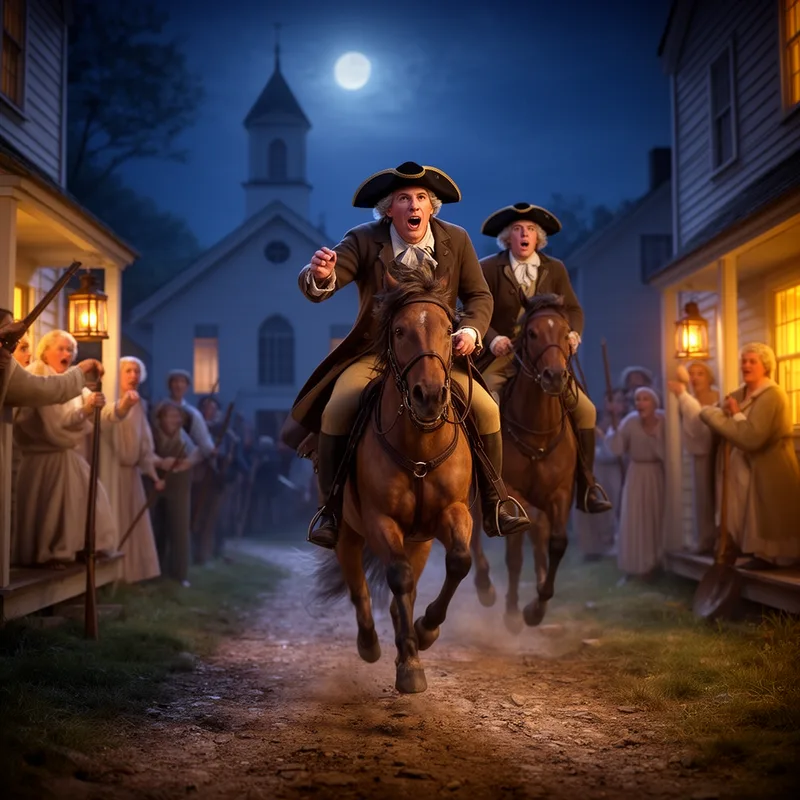
William Dawes


 1
7.4
- proper noun
- /ˈwɪljəm dɔːz/
- Many people know about Paul Revere, but William Dawes made the same midnight ride to warn the colonists.
Examples
-
William Dawes played a crucial role in alerting the colonial militia before the battles of Lexington and Concord.
-
The ride of William Dawes is an important but often overlooked event in American Revolutionary history.
-
William Dawes rode through the night.
-
Did William Dawes really ride with Paul Revere?
-
William Dawes rode alongside Paul Revere to warn the colonists of the British troops during the American Revolution.
-
In April 1775, William Dawes hurried through the streets to alert the Minutemen about the British invasion.
-
William Dawes is often remembered for his vital journey to inform the colonies of impending danger.
Surface Forms
Morphology
William + Dawes
This is a proper name referring to a specific historical person; knowing the constituent words 'William' and 'Dawes' (both personal names) does not allow a learner to infer his identity or the action of warning colonists. Proper names are referential rather than compositional, so the MWE's meaning is not derivable from its parts for a B1 learner.
Etymology
William Dawes is the name of the rider who, like Paul Revere, rode at night to warn people that British soldiers were coming. He went through towns with lanterns and shouted to 'wake up' the colonists, so his name is remembered as a sign of a quick 'warning' before danger.