
Whistlerian


 1
9.9
- adjective
- /ˌwɪsˈtleriən/
- Literature
- Critics praised the Whistlerian atmosphere of the landscape, noting its subtle harmony and mood.
Examples
-
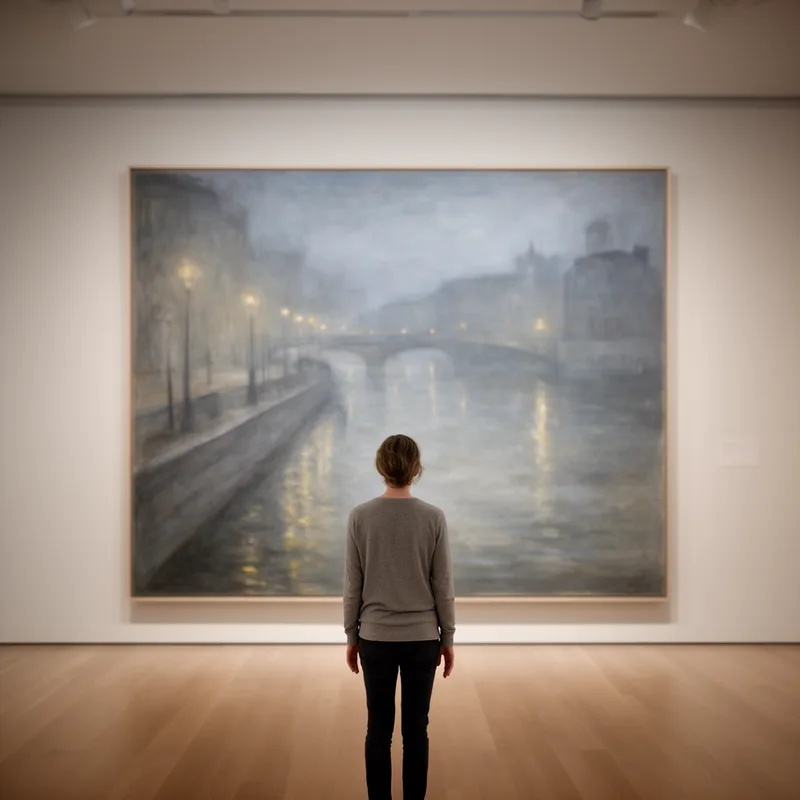
The painting had a distinctly Whistlerian quality to it.
-
The artist's use of soft colors and delicate lines gave the portrait a Whistlerian elegance.
-
Her latest exhibition features several Whistlerian works inspired by nocturnal city scenes.
-
Her use of color was very Whistlerian in its subtlety.
-
The painting was a stunning example of Whistlerian technique, with soft colors and graceful lines.
-
Her use of muted hues gave the room a Whistlerian elegance that reminded everyone of the famous artist's work.
-
Critics praised the Whistlerian qualities of the artist's latest exhibition, highlighting the delicate balance of light and shadow.
Surface Forms
Morphology
Whistlerian = Whistler (transparent) = Whistler + ian
The adjective is formed by the regular suffix '-ian' added to the proper name 'Whistler', yielding 'relating to Whistler', which is a predictable formation.
Etymology
Whistlerian comes from the name Whistler, the painter James McNeill Whistler. It describes art with soft tones and quiet balance, so calling a work Whistlerian means it looks 'like Whistler' in style.