

Wellington
 18
7.2
18
7.2

- proper noun
- Many streets and landmarks are named after the Duke of Wellington in recognition of his contributions.
- Duke of Wellington
- Wellington's victory
Loading YouTube…
Watch on YouTubeBut who is the great general who is who is Wellington?
- But who is the great general who is who is Wellington?
Examples
-
They were posted up here under the command of the Duke of Wellington.
-
With darkness falling and his army exhausted, Wellington called off the pursuit.
-
"...and she might remember what the Duke of Wellington said about sports.
-
Sir, what was Wellington doing in Spain in the first place?
-
Of course you know he served under Wellington in Portugal and Spain.
Fiction book (1993) -
After Grey's resignation in May 1832, William IV turned to Wellington to form an administration.
Academic text (2010) -
Was Wellington's static, unyielding defense the main factor, or did the last-minute arrival of Prussian reinforcements turn the tide?
Academic text (2007) -
Ironically, after the Battle of Waterloo sealed Bonaparte's fate, the service was given to the victorious General Wellington by Louis XVIII in the hopes that the British would look favorably on him and support his return to the French throne.
Academic text (2004) -
The Duke of Wellington is remembered for his pivotal role in the Battle of Waterloo.
-
The Duke of Wellington served as Prime Minister and greatly influenced British politics during his time.
Synonyms
 1
6.3
1
6.3
A British general and political leader who defeated Napoleon at Waterloo and later became Prime Minister of the United Kingdom

A British general and politician who defeated Napoleon at Waterloo and later served as Prime Minister

A British general who beat Napoleon at Waterloo and later became Prime Minister

A British general and politician best known for defeating Napoleon at Waterloo
Compounds
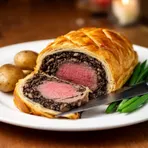


 1
2.9
1
2.9
A knee-length waterproof boot made of rubber or leather for wearing outdoors
A British general who beat Napoleon at Waterloo and later became Prime Minister
Surface Forms
Etymology
The name Wellington for the 1st Duke comes from an English place name that includes well, meaning 'spring' or 'water', so it originally meant 'settlement by the spring' and his title came from that place.