
Weimar
 10
6.8
10
6.8

- proper noun
- /ˈvaɪmɑr/
- In 1919, the city of Weimar became significant as the birthplace of the Weimar Republic's democratic constitution.
- Weimar Republic
- Weimar Germany
- Weimar era
Loading YouTube…
Watch on YouTubeAnd the big cities there are Dresden and Leipzig and Weimar, which was the city of Goethe and Schiller.
- And the big cities there are Dresden and Leipzig and Weimar, which was the city of Goethe and Schiller.
- There was an academic who said that this, this evening on Twitter, he said feels very much like the last evening in a bar in Weimar Germany.
Examples
-
Now something similar to the erosion of the Weimar Republic is happening on a larger scale.
Blog text (6) -
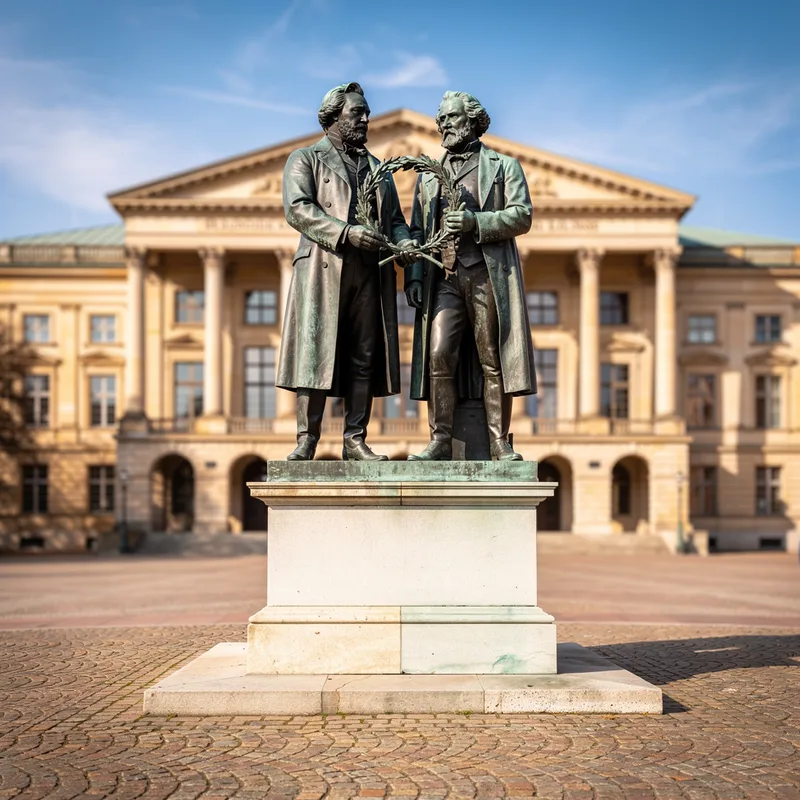
The historic city of Weimar in Germany is renowned for its contributions to art and culture during the early 20th century.
-
In fact, the Weimar Republic will never have a majority government again.
-
In my view, the U.S. is about to enter the Weimar Republic stage of paper money collapse.
Blog text (24) -
Collapse of the Weimar Republic, internal disorder, the rise of Hitler.
-
Following World War I he became one of the leaders of the Weimar Republic and was one of the framers of its democratic constitution.
-
The situation resembles too much the state of the Weimar Republic in the early 1920s.
Blog text (17) -
I have cited the example of the Weimar Republic in some forums.
Blog text (6) -
In 1919, led by Walter Gropius, it developed into the State Bauhaus in Weimar.
Academic text (1991) -
I think the Weimar Republic destroyed itself in two disastrous economic calamities, the inflation and then the deflation.
Compounds

Surface Forms
Etymology
Weimar is the name of a German town, and one common idea is that it comes from old German parts like wih 'holy' and mar 'lake' or 'marsh'. So the name probably described where the town began — a holy spot or land by still water — which is why it became the city's name.