
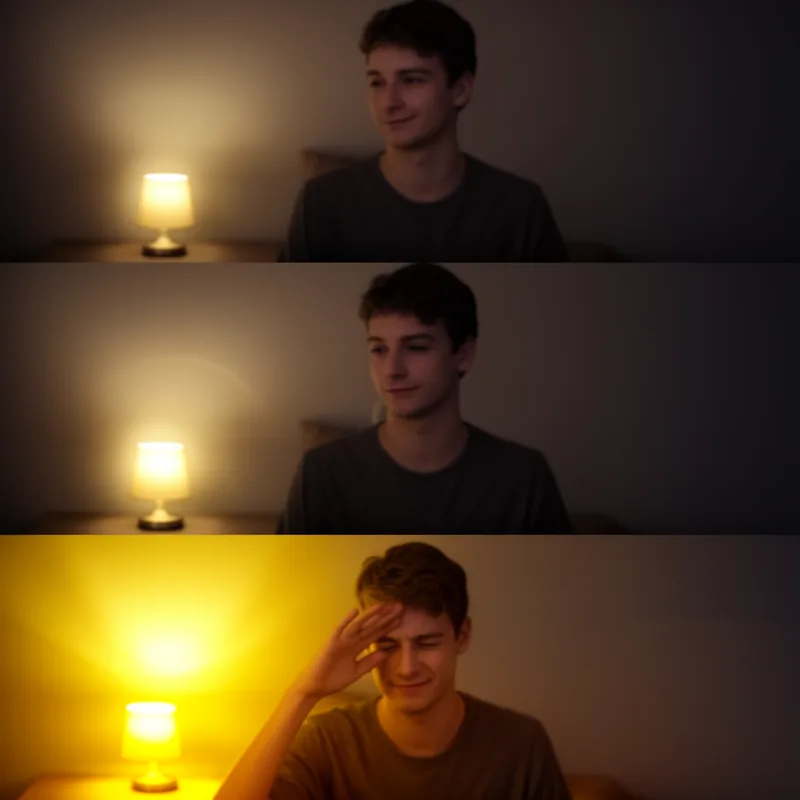
Weber-Fechner law
- noun
- /ˈwɛbər ˈfɛknər lɔ/
- Specialized
- The Weber-Fechner law helps explain why a dim light must be increased significantly before it seems noticeably brighter.
Examples
-
The Weber-Fechner law explains why a dim light must be increased significantly before it seems noticeably brighter.
-
Researchers applied the Weber-Fechner law to analyze how people perceive changes in sound volume.
-
Many introductory psychology textbooks discuss the Weber-Fechner law when introducing the study of sensation and perception.
-
The Weber-Fechner law explains how we perceive changes in stimuli.
-
According to the Weber-Fechner law, our senses react logarithmically.
-
Many introductory psychology textbooks discuss the Weber-Fechner law when introducing the study of sensation and perception.
-
Researchers applied the Weber-Fechner law to analyze how people perceive changes in sound volume.
Synonyms

A rule that sensations like brightness or loudness grow slowly as the things that cause them get stronger
Surface Forms
Morphology
Weber-Fechner + law
This is an eponymic technical term formed from researchers' names plus the word 'law', so knowing 'law' and the names does not convey the specific psychophysical/logarithmic meaning. The phrase is domain-specific and lexicalized; a B1 learner who knows the constituents would not be able to infer the precise principle without prior exposure or subject knowledge.
Etymology
Weber-Fechner law is named after two scientists who tested how we 'notice' change. They found, for example, that adding a small weight to a light object feels big but the same small weight on a heavy object hardly feels different, so the law explains why a change must be large compared with what you already have before you 'notice' it.

