
Wabash River
- proper noun
- /ˈwɔːbæʃ ˈrɪvər/
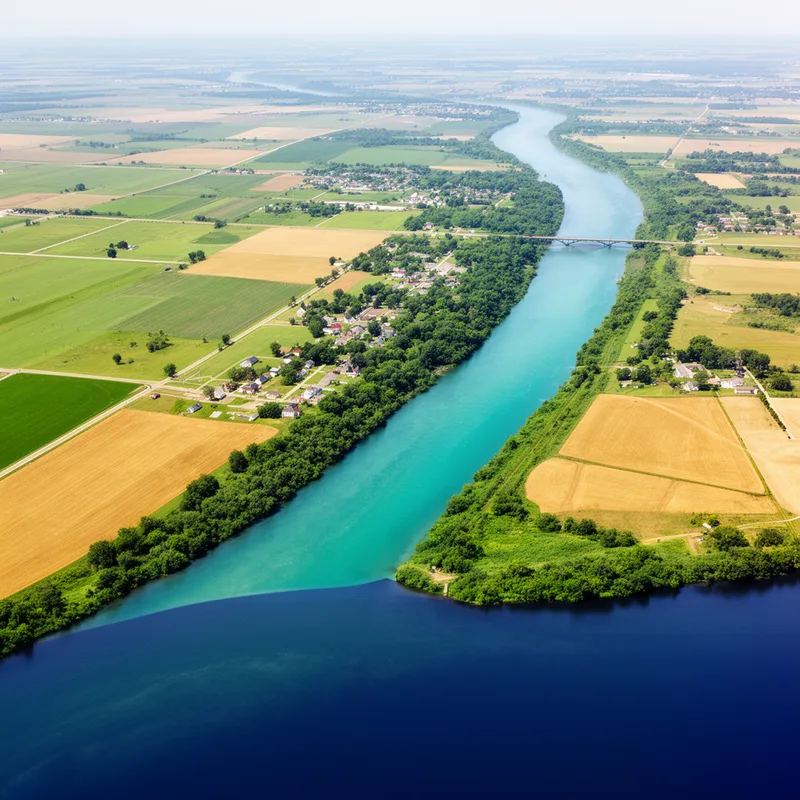
- The Wabash River flows through the heart of Indiana, providing scenic views along its banks.
Examples
-
The Wabash River is an important tributary that joins the Ohio River in the southern part of the state.
-
Many recreational activities, such as fishing and boating, take place on the Wabash River during the summer.
-
The Wabash River plant in Indiana will start sending coal gas into a fuel cell early next year.
Academic text (2003) -
They are scheduled to be installed at the Wabash River plant by the end of the month and run for one year.
Academic text (2003) -
But the coal at the Wabash River plant is first turned into a hydrogen-rich gas.
Academic text (2003) -
For the Wabash River demonstration, eight stacks will be combined for a total of 2 MW.
Academic text (2003) -
The first was a 1950s-vintage pulverized coal-burning boiler in western Indiana, the Wabash River plant, operated by Global Energy of Houston.
Academic text (2003) -
Steinfeld said the project is aiming for efficiencies in the 48 percent range, a 20 percent improvement over the efficiency of the current IGCC plant at Wabash River.
Academic text (2003) -
The Wabash River Coal Gasification Repowering Project in West Terre Haute is preparing to receive a two-megawatt fuel cell system designed to convert gasified coal into electricity.
Academic text (2003)
Synonyms

 11
7.5
11
7.5

A river in the United States that flows from western Ohio through Indiana to the Ohio River
Surface Forms
Morphology
The expression is a straightforward name + noun combination: 'Wabash' (a toponym) plus 'river' yields the referential meaning 'the river called Wabash'. This compositional, referential pattern (name + geographic term) is common across languages and is not idiomatic, so a B1 learner who knows both constituents will understand it.
Etymology
Wabash River may come from a Native American word that meant 'white' or 'shining' river, which French settlers wrote down as 'Ouabache'. So the name shows the river's bright, light-coloured water, and that is why we still call it the Wabash River today.