
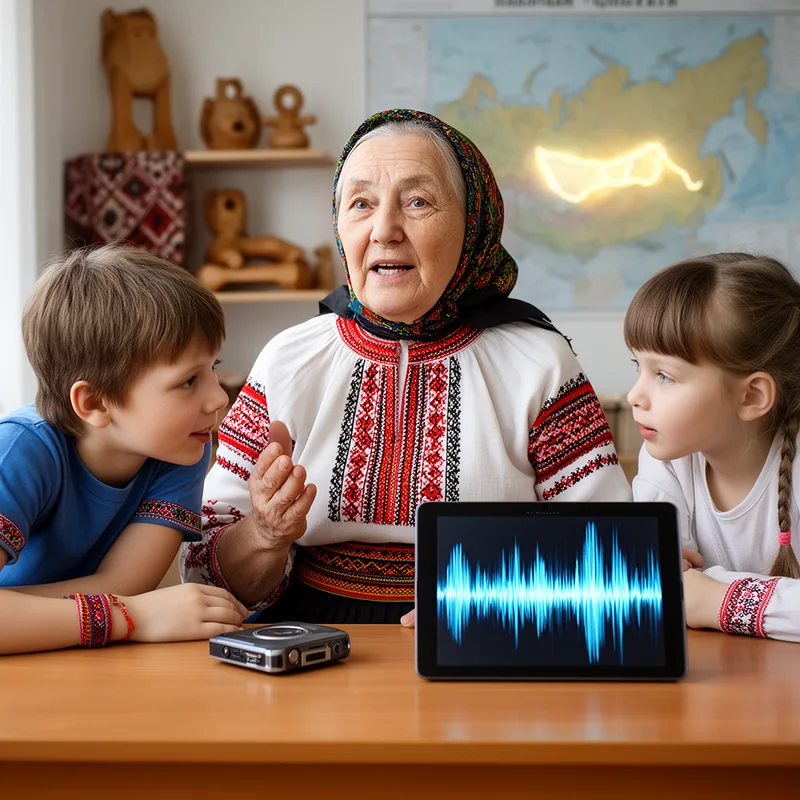
Votyak language
- noun
- Archaic
- The Votyak language is spoken by the Udmurt people.
Examples
-
Efforts are being made to preserve and revitalize the Votyak language among younger generations.
-
She studied the Votyak language as part of her research into Finno-Ugric cultures.
-
The Votyak language has unique phonetic characteristics that distinguish it from neighboring languages.
-
Many young people are learning the Votyak language today.
-
Efforts are being made to preserve and revitalize the Votyak language among younger generations.
-
She studied the Votyak language as part of her research into Finno-Ugric cultures.
-
The Votyak language has unique phonetic characteristics that distinguish it from neighboring languages.
Synonyms


 1
9.9
A language spoken by the Udmurt people in Russia
A language spoken by the Udmurt people in Russia

A language spoken by the Udmurt people mainly in the Udmurt Republic of Russia
Surface Forms
Morphology
This is a straightforward composition of the proper name 'Votyak' and the noun 'language', so the meaning 'the language spoken by the Votyak/Udmurt people' is directly derivable from the parts. The pattern X + language (e.g. French language, Spanish language) is cross-linguistically common and follows standard naming conventions, making it immediately comprehensible to a B1 learner who knows both constituents.
Etymology
Votyak language comes from the old name Votyak, used by nearby people for the group now often called 'Udmurt'. It simply names the language those people spoke, so today the phrase means 'the language of the Votyak people', who are also called 'Udmurt'.