

Virginia crownbeard
- noun
- US
- The clusters of white flowers make the Virginia crownbeard easy to recognize in late summer.
Examples
-
The Virginia crownbeard can often be found growing along roadsides and in open fields.
-
Botanists identified several specimens of Virginia crownbeard during their survey of the wetland.
-
The Virginia crownbeard grows in sunny areas.
-
Have you seen the Virginia crownbeard blooming?
-
The clusters of white flowers make the Virginia crownbeard easy to recognize in late summer.
-
The Virginia crownbeard can often be found growing along roadsides and in open fields.
-
Botanists identified several specimens of Virginia crownbeard during their survey of the wetland.
Synonyms

A tall plant that lives many years with clusters of white flowers in the eastern United States, also called frostweed
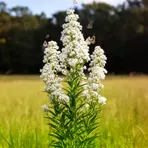
A tall plant that lives for many years with clusters of white flowers in fields and open woods
Surface Forms
Morphology
This is a straightforward place-name + noun compound: knowing 'Virginia' (the U.S. state) and 'crownbeard' (a plant genus) lets a learner infer it denotes the crownbeard species/variety associated with Virginia, i.e. a tall herb with clustered flowers. The meaning is strictly compositional and follows a common cross-linguistic naming pattern (location + noun), so there is no idiomatic or metaphorical shift.
Etymology
Virginia crownbeard may come from the way its white flower clusters sit like a small crown at the top of a tall stem, while the long, hair-like leaves or bristles look like a beard. The word Virginia points to the area where the plant is common, so the name helps you remember it as a 'tall herb with clusters of white flowers'.

