
Vespasian
 3
9.9

- proper noun
- Josephus was a historian who was paid by the Roman general Vespasian to write about the events of that time by appointing him the court historian.
- Vespasian the emperor
Loading YouTube…
Watch on YouTubeAnd then finally the Vespasian takes over.
- And then finally the Vespasian takes over.
- And then all of these other emperors and their reigns, including Vespasian and his his sons who are involved in things.
Examples
-
The front side of this coin displays the emperor Vespasian, who died in A.D. 79.
Academic text (1995) -
His father, Vespasian, was loved by his people, and they continue that love for his son.
-
Otho, who came second, ended up taking his own life; and Vespasian, who founded his own dynasty, came last.
Academic text (2014) -
As Vespasian approached with his army, this emperor was hauled from his hiding place in the palace.
Academic text (2014) -
As he lay dying, Vespasian, aware that his son Titus would deify him after his death, joked.
-
Father also told me Suetonius's story of the Roman emperor Vespasian, who, as he lay dying, referring to the custom of deifying past emperors, remarked to his courtiers, "Gentlemen, I fancy I am becoming a god."
Academic text (1997) -
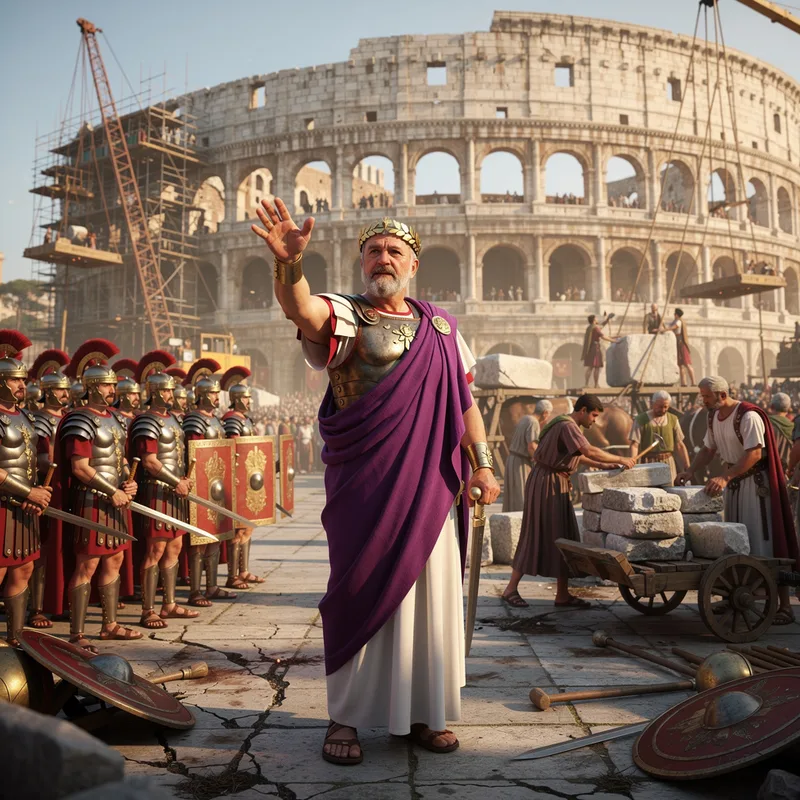
The emperor Vespasian initiated the construction of the Colosseum in Rome.
-
Under Vespasian, the Roman Empire experienced significant reforms in the military.
-
History notes that Vespasian was a key figure in restoring stability to Rome after years of turmoil.
Surface Forms
Etymology
Vespasian comes from the Roman family name Vespasius, from Latin vespa meaning 'wasp'. Thinking of a wasp as small but strong can help you remember Vespasian was a tough Roman emperor who brought order and began the Colosseum.