
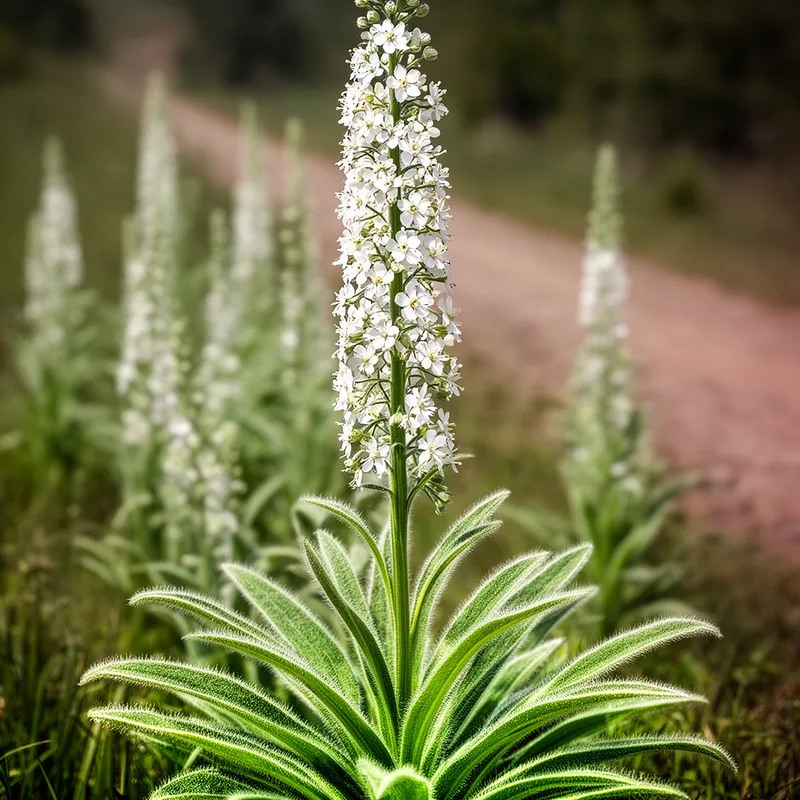
Verbascum lychnitis
- noun
- Specialized
- The roadside was lined with tall Verbascum lychnitis in full bloom.
Examples
-
Gardeners appreciate Verbascum lychnitis for its striking white flower spikes.
-
Verbascum lychnitis has become naturalized in parts of North America.
-
The Verbascum lychnitis thrives in sunny gardens.
-
Are you familiar with Verbascum lychnitis?
-
Verbascum lychnitis, known for its densely hairy leaves, is often found in gardens across North America.
-
Many visitors admire the tall spikes of white flowers on Verbascum lychnitis during summer.
-
You can identify Verbascum lychnitis by its unique white blooms and fuzzy foliage.
Synonyms

A tall plant from Europe and Asia with hairy leaves and white flowers
Surface Forms
Morphology
Verbascum + lychnitis
This is a Latin binomial (genus + species) functioning as a taxonomic label rather than a compositional English phrase; knowing 'Verbascum' as a genus name and an obscure epithet like 'lychnitis' would not let a B1 learner infer the plant's characteristics. The species epithet is not an ordinary English word and the name is essentially an arbitrary technical label used internationally, so the meaning cannot be derived from the constituents.
Etymology
Verbascum lychnitis may come from old words that describe how the plant looks: Verbascum refers to the plant's hairy, 'bearded' leaves, and lychnitis comes from a Greek word for 'lamp' because some mulleins were used as torches. So, the name helps you picture a tall, hairy plant with a pale, lamp-like flower spike.

