
VOC
 2
7.7

- noun
- /viː.oʊ.si/
- Specialized
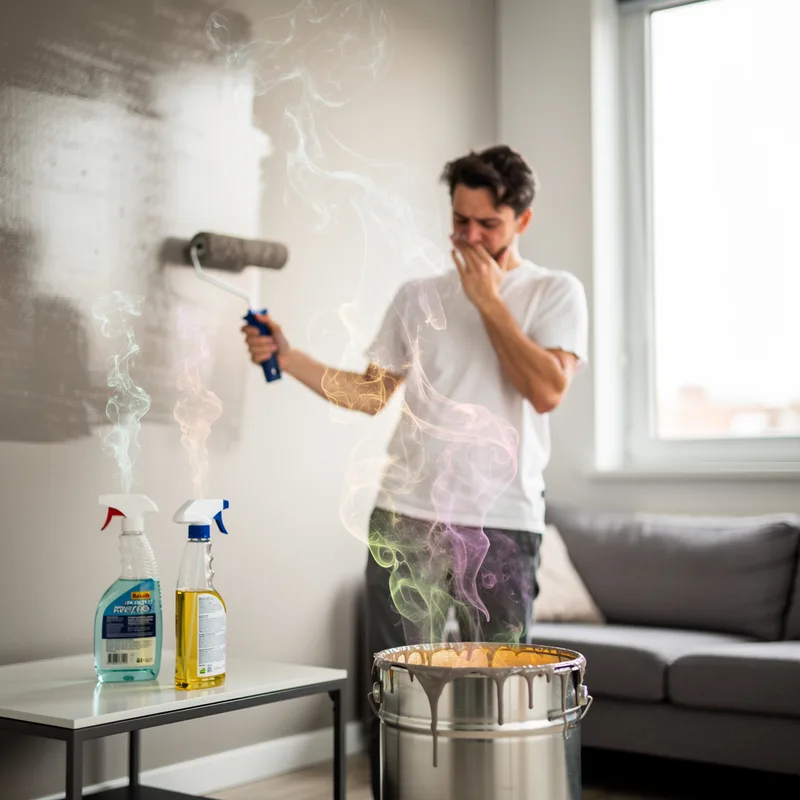
- Conventional interior paint contains VOCs, which can pollute the air and harm health.
- VOC emissions
- VOC reduction
- VOC regulations
Examples
-
Materials are all healthy choices, with low or no VOC finishes, cellulose insulation, and lots of natural light.
Blog text (25) -
Researchers are studying the effects of VOCs on indoor air quality in urban environments.
-
We also account for the change in VOC emissions associated with the rebound effect.
Academic text (1993) -
Figure 2 shows the cost-effectiveness estimates with and without the VOC reduction benefits.
Academic text (1993) -
After that 15%, serious, severe, and extreme areas must further reduce VOC emissions by 3% per year until attainment.
Academic text (1996) -
Sources of VOCs include motor vehicles, vapors from chemical plants, and vapors released from gas stations.
Academic text (1992) -
Milestones are specific percentage reductions of VOCs to encourage gradual progress towards attainment.
Academic text (1996) -
Munters' synthetic zeolite repels water while it adsorbs VOCs and is 94 percent effective.
Academic text (2000) -
In local airsheds, interpollutant trading has been sanctioned between NOx and VOCs in Connecticut, New Hampshire, and Maine.
Academic text (2000) -
Many household products, including cleaners and adhesives, release VOCs into the air.
Surface Forms
Etymology
VOC stands for volatile organic compound, where volatile means 'quick to turn into a gas', organic means 'made of carbon and often from living things', and compound means 'a thing made of two or more parts'. So, a VOC is a chemical that easily becomes a gas and can pollute the air.