
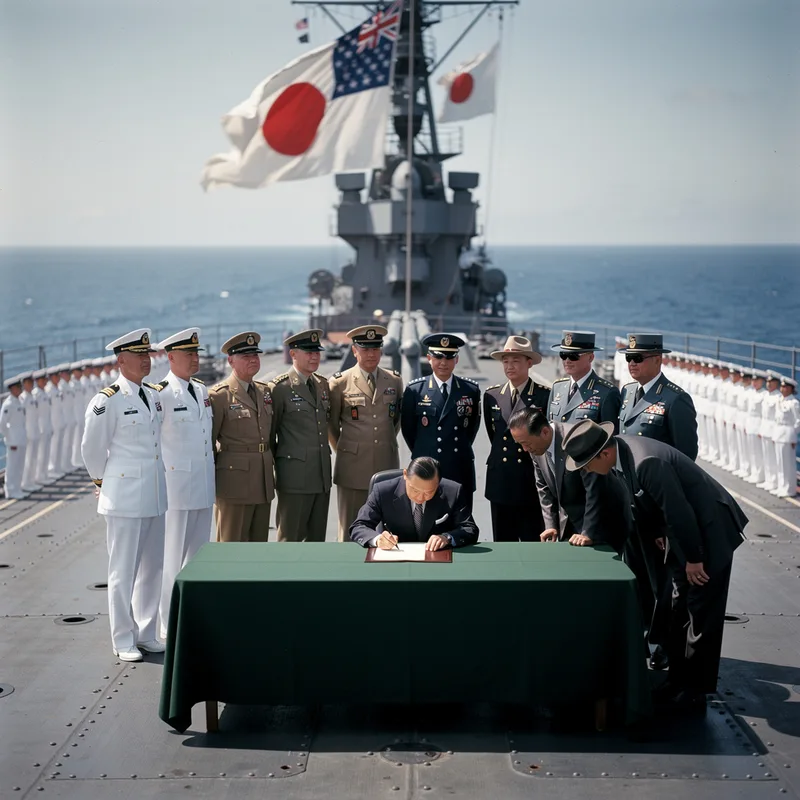
V-J Day
 1
4.6
1
4.6

- noun
- /viː ˈdʒeɪ deɪ/
- She knew what was happening; she went to Times Square just to get in on the V-J Day celebration.
- V-J Day in 1945
- months after V-J Day
- just after V-J Day
Examples
-
In September of that year, 1945, I was assigned to London and also detailed as Secretary of our delegation to the first Council of Foreign Ministers, which met in London immediately after V-J Day to try to negotiate peace treaties with Italy, Germany, and the eastern European countries.
Blog text (28) -
Captured in Times Square on V-J Day, 1945, it has become one of the most iconic photographs of American history, symbolizing the jubilation and exuberance felt throughout the country at the end of World War II.
Blog text (16) -
To this day, the individuals in the actual title of the photograph "V-J Day in Times Square" are still contested.
Blog text (16) -
It doesn't matter if you were a man or a woman; V-J Day was a day that seared itself into your soul.
Blog text (16) -
On V-J Day, he was a captain in Army Air Forces intelligence stationed at the Pentagon.
-
The instructions had been delivered by the Emperor in a broadcast just before V-J Day, the first broadcast that any Japanese emperor had ever made.
-
At the end comes a moment of release; such was V-J Day in 1945.
Synonyms
A day marking the end of fighting between Japan and other countries in World War II
Surface Forms
Morphology
V-J + day
The segment 'V-J' is an initialism that stands for 'Victory over Japan' and is not compositionally interpretable from its letters by a typical B1 learner; 'day' only indicates an observance and does not supply the missing event meaning. Understanding this term requires specific historical/cultural knowledge of the abbreviation, so the overall expression is not derivable from its constituents.
Etymology
V-J Day comes from the abbreviation V-J, which stands for 'Victory over Japan'. It names the day in 1945 when Japan surrendered and people celebrated, so today V-J Day means the day marking the Allied victory over Japan.