
Usneaceae
- noun
- /ˌʌsniˈeɪʃiˌi/
- Specialized
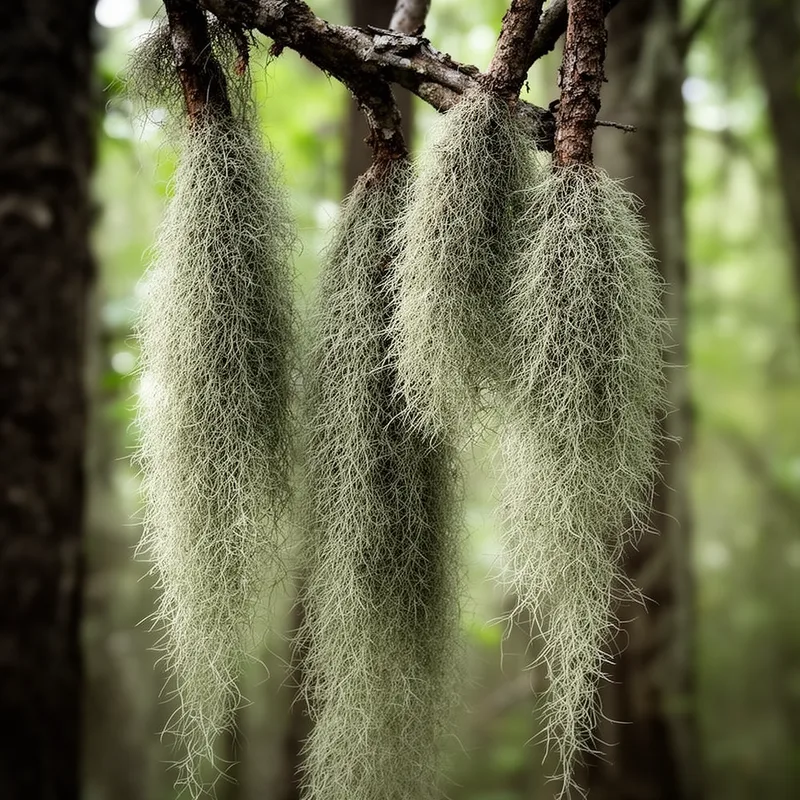
- The Usneaceae family comprises lichens that are often referred to as beard lichens due to their appearance.
Examples
-
Members of the Usneaceae can be found growing on tree branches in many forests worldwide.
-
Researchers have studied the chemical compounds produced by Usneaceae for their medicinal properties.
-
The Usneaceae family is known for its unique fruticose structure.
-
Many species of Usneaceae thrive in cold environments.
-
Members of the Usneaceae family can be found growing on tree branches in many forests worldwide.
-
The Usneaceae family comprises lichens that are often referred to as beard lichens due to their appearance.
-
Researchers have studied the chemical compounds produced by Usneaceae for their medicinal properties.
Surface Forms
Morphology
Usneaceae = Usnea (semi-transparent) = Usnea + aceae
Formally built from the genus name 'Usnea' plus the standard botanical family suffix '-aceae'; the morphological structure is regular but understanding requires knowledge of taxonomic naming conventions.
Etymology
Usneaceae comes from the lichen name Usnea, a type of lichen often called a 'beard', plus the ending -aceae which means 'family' in plant and lichen names. So, Usneaceae is simply the 'family' of beard-like lichens, which explains why its members often hang like small beards from tree branches.

