
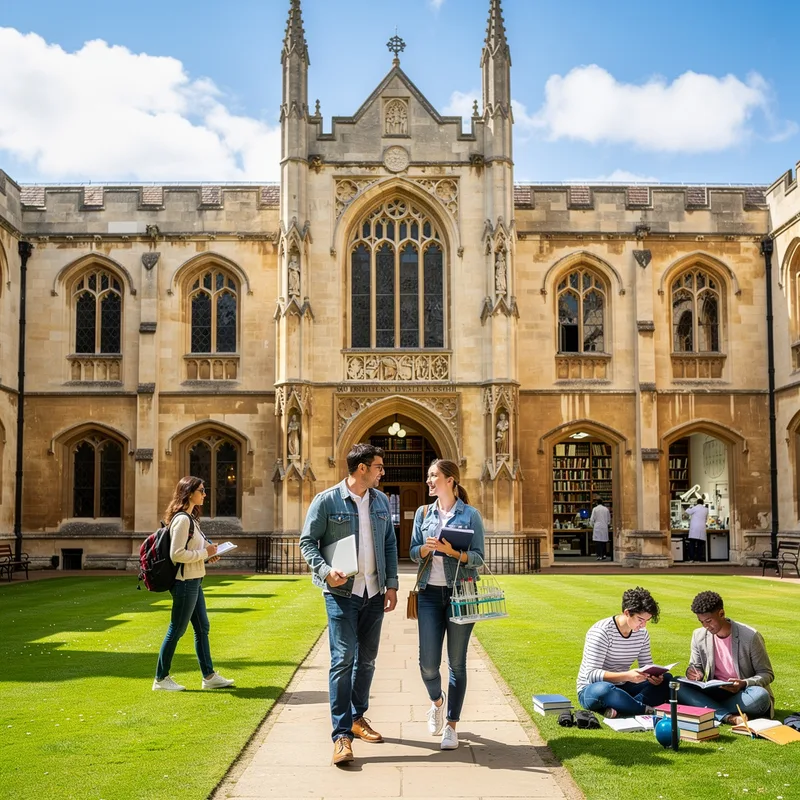
University of Cambridge
 2
2.7
2
2.7

- proper noun
- Students from all over the world aspire to study at the University of Cambridge.
- Ph.D. from the University of Cambridge
- University of Cambridge, England
- University of Cambridge graduate
Examples
-
A research team led by James Russell at the University of Cambridge has used a process of elimination to find out.
Blog text (22) -
Todd pursued all of her higher education at the University of Cambridge. Ph.D. (1977), University of Cambridge, U.K. Nien-Tszr (Tom) Tsai.
Academic text (2001) -
Dr. Philbert is a graduate of the University of Cambridge.
Blog text (27) -
Christine Gray is a Professor of International Law at the University of Cambridge and a Fellow of St John's College, Cambridge.
Blog text (22) -
Gabriel Latner is a law student at the University of Cambridge and currently a student fellow at the Lawfare Project.
Academic text (2011) -
TONY KELLY is a distinguished research fellow in the University of Cambridge's Department of Materials Science and Metallurgy in Cambridge, England.
Academic text (1999) -
George Henderson is emeritus professor of art history at the University of Cambridge, England, where Isabel also taught the subject for over twenty years.
Academic text (2004) -
Mrs. Polly Courtice, LVO, is the Director of the University of Cambridge Programme for Sustainability Leadership.
Blog text (19) -
More than thirty years ago, Colin Renfrew of the University of Cambridge made one of the grand syntheses that made him famous in archaeological circles.
Academic text (2004) -
Many renowned scholars have graduated from the University of Cambridge in England.
Synonyms
 32
3.2
32
3.2
A famous university in England known for strong teaching and research
 5
3.5
5
3.5
A famous university in Cambridge, England known for its strong teaching and research
Surface Forms
Morphology
university + of + Cambridge
The phrase is fully compositional: 'university' (place that grants degrees) + 'of' (genitive/locative marker) + the place name 'Cambridge' yields the meaning 'the university located in Cambridge.' This possessive/locative naming pattern is common across languages, so a B1 learner who knows the constituent words will readily infer the intended referent.
Etymology
The University of Cambridge began in the 1200s when groups of teachers and students left Oxford after fights with townspeople and set up schools in the town of Cambridge. The name Cambridge comes from the River Cam and a bridge over it, and over many years small colleges grew around churches and halls, so today the University of Cambridge means a very old, respected 'school'.