
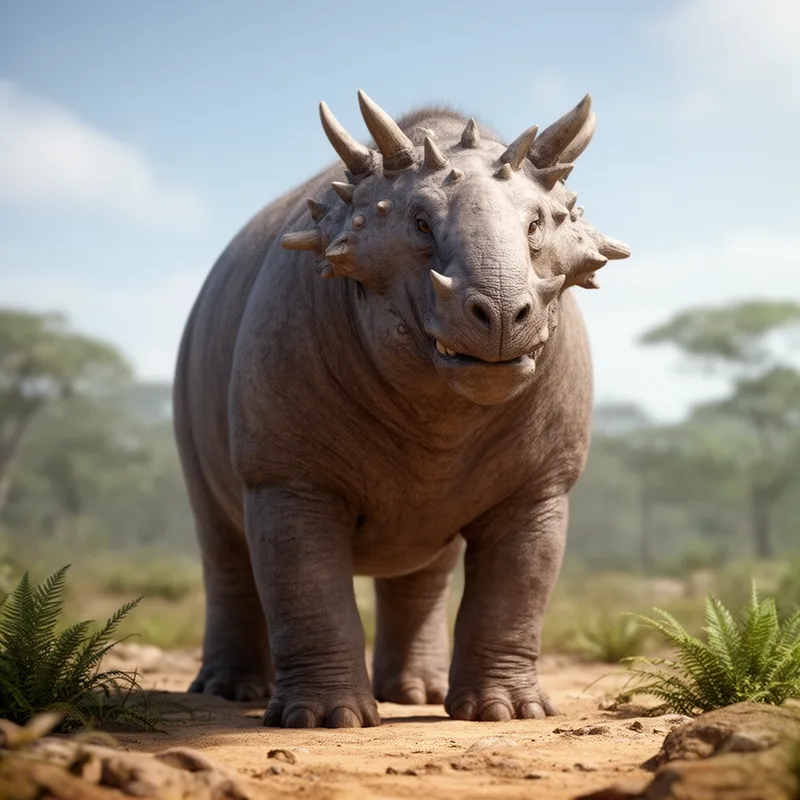
Uintatherium
- noun
- /juːˈɪn.təˌθɪr.i.əm/
- Specialized
- The large, horned skull of Uintatherium fascinated paleontologists in the nineteenth century.
Examples
-
In museums, reconstructions of Uintatherium help illustrate the diversity of prehistoric mammals.
-
Many fossils of Uintatherium have been discovered in Wyoming.
-
Fossils of the Uintatherium have been discovered in Eocene strata in Wyoming.
-
The Uintatherium roamed the Earth millions of years ago.
-
Fossils of the Uintatherium have been discovered in Eocene strata in Wyoming.
-
In museums, reconstructions of Uintatherium help illustrate the diversity of prehistoric mammals.
-
The large, horned skull of Uintatherium fascinated paleontologists in the nineteenth century.
Synonyms
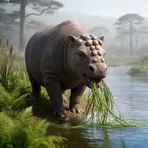
A large extinct plant-eating mammal with three pairs of bony bumps on its skull
Surface Forms
Morphology
Uintatherium = Uinta (opaque) = Uinta + therium
The name combines the place name 'Uinta' with the scientific combining form '-therium' ('beast'), but '-therium' is not a familiar English morpheme to average learners and does not yield a clear meaning.
Etymology
The word Uintatherium comes from the place name Uinta, where its fossils were first found, and the Greek word therion meaning 'beast'. So Uintatherium literally means the 'beast from Uinta', which fits this large, horned prehistoric animal.

