
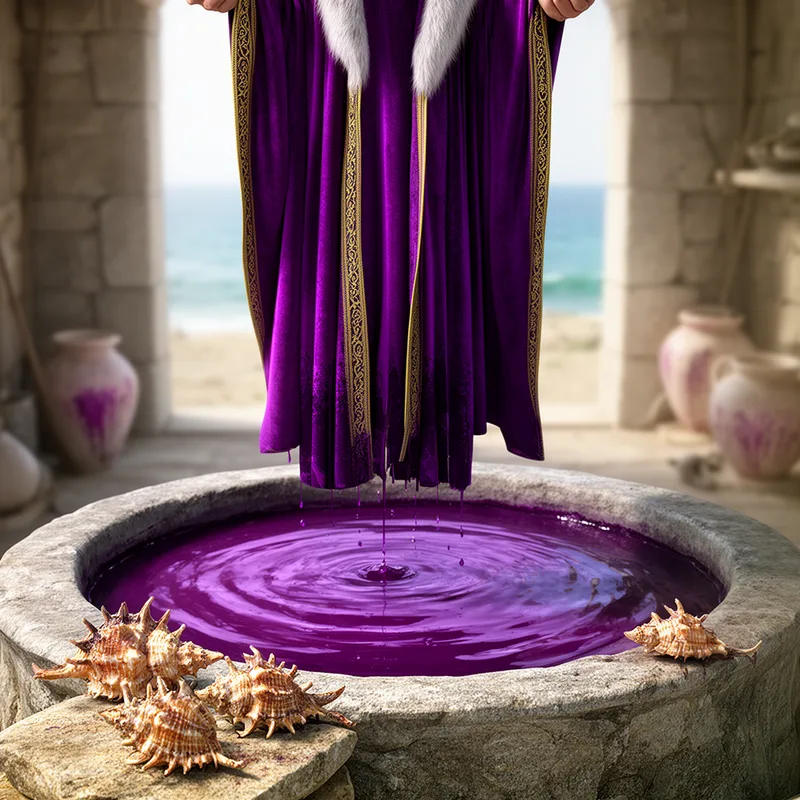
Tyrian purple
- noun
- /ˈtɪəriən ˈpɜrpl/
- The robe was dyed in Tyrian purple.
Examples
-
Archaeologists discovered traces of Tyrian purple in the ancient pottery.
-
By the Middle Ages, cheaper alternatives had replaced Tyrian purple in most textiles.
-
The royal robes were dyed with the rare Tyrian purple reserved for emperors.
-
Ancient royalty often wore Tyrian purple garments.
-
The robes of the ancient kings were dyed in Tyrian purple, a color that symbolized their royal status.
-
Artisans in ancient Phoenicia created beautiful textiles using Tyrian purple, which became synonymous with luxury.
-
In historical paintings, garments made of Tyrian purple are often worn by nobles to signify their wealth.
Synonyms

 83
1.0
83
1.0

A color between red and blue


 1
4.2
1
4.2
A deep purple color with a red tone used to show wealth or power
 1
2.2
1
2.2
A red color mixed with purple

A purple dye made in ancient Tyre used to color clothes

A deep purple color mixed with red

A purple color that has some red in it
A color between red and purple, like ripe grapes

A color between violet and purple
How Purple

Surface Forms
Morphology
The compound is directly compositional: 'Tyrian' denotes origin (from Tyre) and 'purple' denotes the color/dye, so a learner who knows both constituents can infer it refers to a purple dye or shade associated with Tyre. The broader historical connotations of rarity and royal use are cultural knowledge beyond literal composition, but the core color/dye meaning is transparently derivable from the parts.
Etymology
Tyrian purple comes from the old city of Tyre, where people made a deep purple dye by boiling thousands of sea snails. Because the dye was very rare and worn by kings and emperors, Tyrian purple came to mean 'royalty' and 'luxury'.