
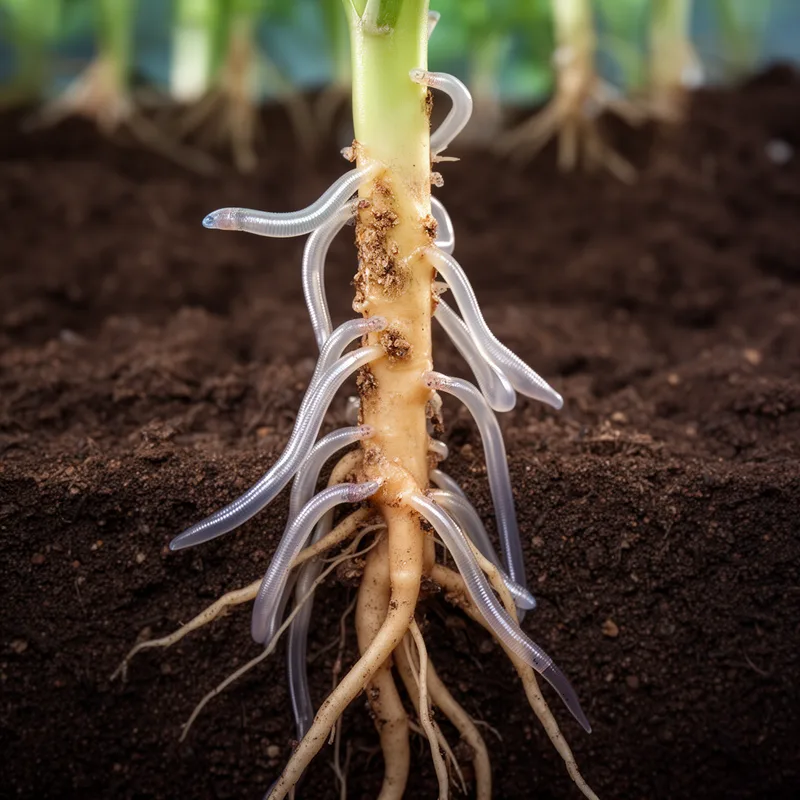
Tylenchidae
- noun
- /taɪˈlɛŋkɪdi/
- Specialized
- Members of the Tylenchidae family can cause crop damage by parasitizing plant roots.
Examples
-
Some species of the Tylenchidae can severely affect the health of crops, leading to significant agricultural losses.
-
Scientists classified the new nematode under the Tylenchidae family due to its morphological traits.
-
The Tylenchidae include important species for agricultural nematology research.
-
The Tylenchidae family includes many harmful plant parasites.
-
Researchers study Tylenchidae to understand their impact on agriculture.
-
The Tylenchidae family is known for containing various plant-parasitic nematodes that threaten food production.
-
Agricultural experts focus on the Tylenchidae to develop strategies for managing plant diseases caused by these parasites.
Surface Forms
Morphology
Tylenchidae = Tylenchus (semi-transparent) = Tylenchus + idae
Formed from the genus name 'Tylenchus' plus the taxonomic family suffix '-idae', which is interpretable to those familiar with biological nomenclature but not to general learners.
Etymology
The word Tylenchidae comes from the scientific genus Tylenchus plus the animal-family ending -idae, which means 'family' in scientific names and appears in names like Canidae for dogs. So Tylenchidae is the 'family' of small worm species related to Tylenchus, many of which live on plant roots and can damage crops.

