

Turritis glabra
- noun
- Specialized
- The fields near the river were covered with Turritis glabra in early spring.
Examples
-
Botanists documented the spread of Turritis glabra into new habitats across Europe.
-
Gardeners sometimes mistake Turritis glabra for other types of cress due to its appearance.
-
The Turritis glabra grows in many European gardens.
-
Have you ever seen a Turritis glabra in the wild?
-
In early summer, Turritis glabra blooms with bright yellow flowers along the roadside.
-
Farmers have noted that Turritis glabra can thrive in poor soil conditions.
-
During a nature walk, we spotted various species, including Turritis glabra, thriving in the meadow.
Synonyms
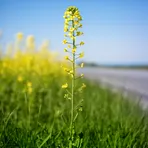
A tall thin plant with small yellow flowers like wild mustard
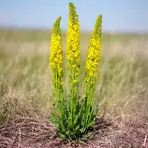
A tall European plant with stiff upright stems and yellow flowers

A plant in the cabbage family with stems that grow straight up and small white flowers
Surface Forms
Morphology
Turritis + glabra
This is a Latin binomial (genus + specific epithet), so a learner who knows the constituents can infer it names a plant species (genus Turritis + descriptor glabra). However, the scientific naming convention and the Latin epithet do not convey the detailed sense 'an erect annual or biennial herb, tower mustard' to a B1 learner without botanical knowledge, so the relation is only partially transparent.
Etymology
Turritis glabra comes from Latin words, with turritis meaning 'tower' and glabra meaning 'smooth'. The plant has a tall, tower-like spike of flowers and smooth stems, so the name helps you picture what the plant looks like.

