
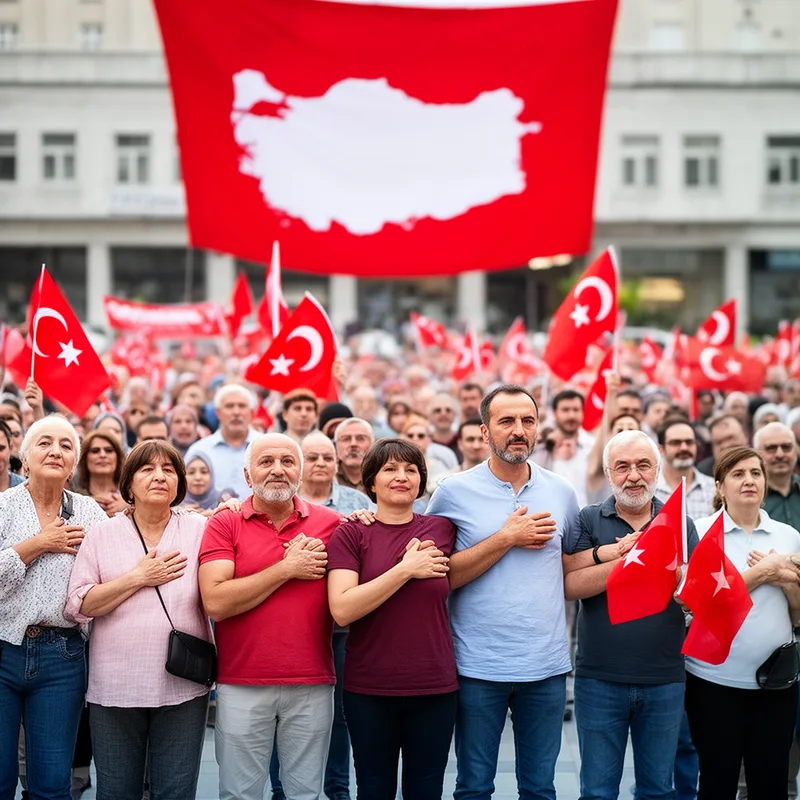
Turkism


 1
9.9
- noun
- /ˈtɜrkɪzəm/
- Each of the four other main political-ideological movements in Turkey, classified as Ottomanism, Westernism, Islamism, and Turkism, especially after the period of the 2nd Constitution, placed varying levels of emphasis on the protection of certain ideas and institutions that were remnants of the past.
Examples
-
Even during the first decade of the 20th century, they were still preoccupied with such socio-political issues as the advantages and disadvantages of employing Westernization, Islamism, and Turkism for the salvation of the state.
Academic text (2000) -
Turkism promotes a sense of unity among Turkism people based on their shared history and culture.
-
On the other hand, the old "Pan Turkism" seems to be void of the ingredients necessary to fulfill the needs of modern Turkey, especially given the failure of Pan Arabism.
Academic text (1996) -
The late Ottoman rulers' gradual shift from Ottomanism-Islamism to Turkism alienated the Arabs from the Ottoman Empire.
Academic text (2002) -
The rise of Turkism in the early 20th century aimed to strengthen national identity among the Turkish population.
-
He studied Turkism as a political movement that focuses on Turkish interests and national pride.
Synonyms
 1
9.5
Political ideas from Mustafa Kemal Atatürk supporting keeping religion separate from government, national unity, and modern reforms
How Nationalist
- Literature
1
9.4
 65
6.0
1
9.9
59
6.4
3
6.0
Surface Forms
Morphology
Etymology
Turkism is made of Turk, meaning 'a person from Turkey', and -ism, meaning 'a belief or movement', as in nationalism. So Turkism can mean a political idea or movement that stresses Turkish national identity and unity.