
Trombicula
- noun
- /trɒmˈbɪkjʊlə/
- Specialized
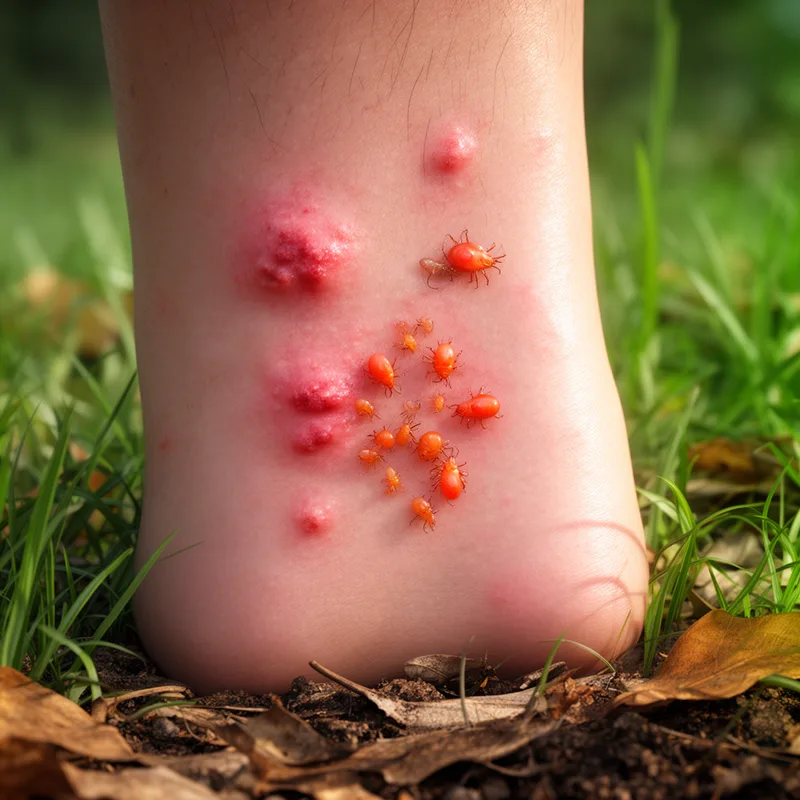
- The larvae of Trombicula mites, commonly called chiggers, can cause itchy welts on the skin.
Examples
-
I found a Trombicula on my leg after hiking.
-
The Trombicula larvae are often found in tall grass.
-
Infestation by Trombicula can lead to irritation, especially in warm, moist environments.
-
Scientists studied the distribution of Trombicula species across different habitats.
-
The larvae of Trombicula mites, commonly called chiggers, can cause itchy welts on the skin.
-
Infestation by Trombicula can lead to irritation, especially in warm, moist environments.
-
The Trombicula larvae are often found in tall grass.
Synonyms
 4
9.9
4
9.9

A tiny red bug whose bite makes the skin very itchy

A tiny mite that bites people and makes their skin very itchy

A tiny creature that burrows into the skin and causes strong itching

A very small baby bug that bites people and makes red itchy bumps on the skin

A tiny mite whose larvae bite and cause itchy skin on animals and people

A family of tiny mites whose young bite people and make skin itchy
Surface Forms
Etymology
Trombicula is a scientific name that uses the Latin ending -cula, a little-ending that means 'small', so a helpful way to remember it is to think 'tiny'. That's why Trombicula names very small mites (chiggers) that can cause itchy bites.