
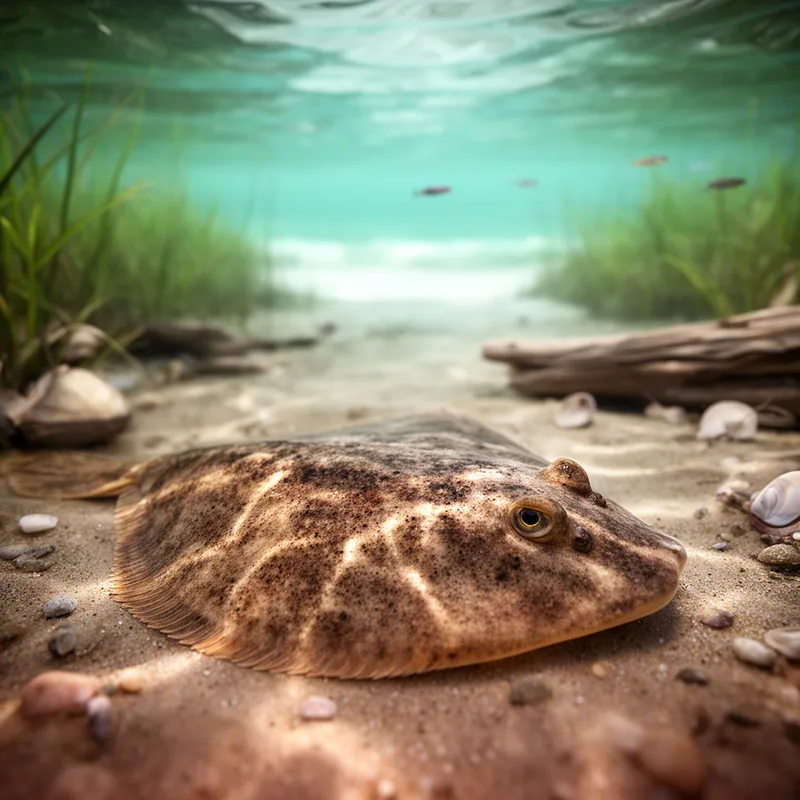
Trinectes maculatus
- noun
- /traɪˈnɛktɪs ˌmækjʊˈleɪtəs/
- Specialized
- Marine biologists often study Trinectes maculatus to monitor ecosystem health in estuaries.
Examples
-
The Trinectes maculatus is commonly found along the Atlantic coast of the United States.
-
The Trinectes maculatus thrives in muddy bottoms of coastal streams.
-
Because of its tough skin and small size, Trinectes maculatus is not considered a good food fish.
-
The Trinectes maculatus is often found in shallow waters.
-
Have you ever seen a Trinectes maculatus in the wild?
-
Scientists are intrigued by the breeding habits of the Trinectes maculatus.
-
When snorkeling, I spotted a Trinectes maculatus hiding among the rocks.
Synonyms


 1
9.9
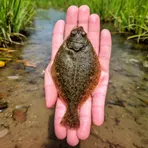
A small flat fish with tough skin found in coastal streams
Surface Forms
Morphology
Trinectes + maculatus
This is a Latin taxonomic binomial that functions as a proper name label rather than a compositional English phrase; knowing 'Trinectes' (a genus) does not transparently give the common meaning 'hogchoker' or 'a small flatfish' to a B1 learner. The second element 'maculatus' is not a common English word (and its Latin meaning 'spotted' is unlikely to be known by B1 learners), so the overall meaning cannot be derived from the constituents.
Etymology
Trinectes maculatus gets its common name 'hogchoker' from a simple picture: farmers often fed these small, flat fish to pigs, and the fish's tough body or bones could make a hog cough or nearly choke. So the name 'hogchoker' stuck and now refers to this small, bony flatfish.