
Tridentine
 2
9.9

- adjective
- /ˌtraɪˈdɛnˌtiːn/
- Formal
- Many traditionalists prefer the Tridentine rites over modern forms of worship.
Examples
-
The Tridentine reforms had a lasting impact on Catholic doctrine and ceremonies.
-
The parish offers a Tridentine Mass every Sunday.
-
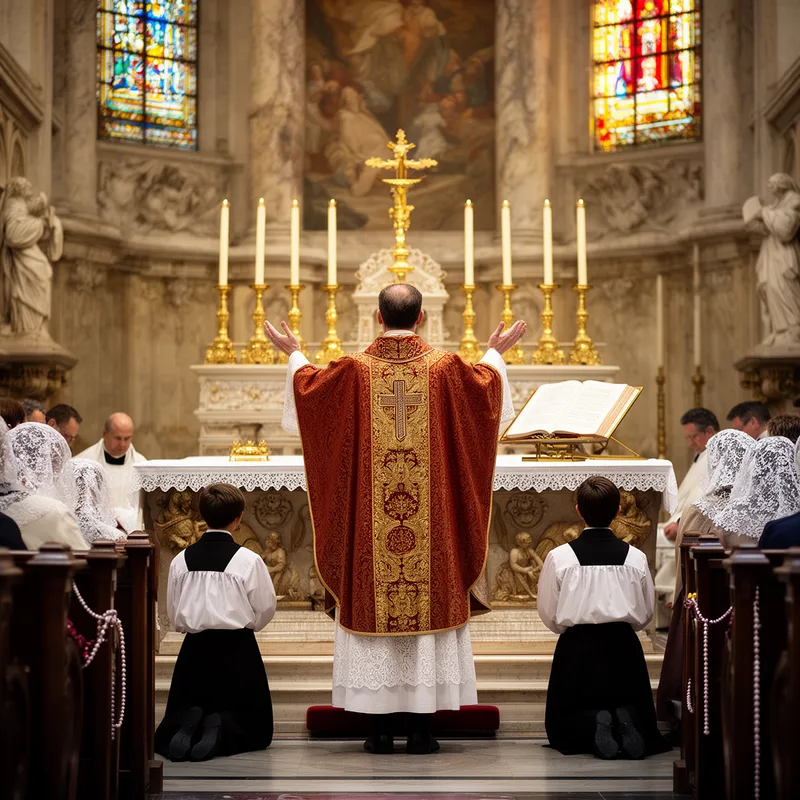
The Tridentine Mass is celebrated in Latin and follows the liturgy set by the Council of Trent.
-
Many people appreciate the Tridentine liturgy for its solemnity.
-
The priest conducted the Tridentine Mass with great reverence, following the rituals established by the Council of Trent.
-
Many Catholics prefer the Tridentine liturgy for its connection to ancient traditions and practices.
-
Attendance at the Tridentine celebration has increased as more people seek the traditional form of worship.
How Traditional

Surface Forms
Morphology
Tridentine = Trent (semi-transparent) = trident + ine
Formally built from the place-name element (Trident/Trent) plus the adjectival suffix '-ine' meaning 'relating to', but the specific religious sense requires knowledge of the Council of Trent, so learners cannot reliably infer the religious/liturgical meaning.
Etymology
Tridentine comes from the Council of Trent, a big meeting of the Catholic Church, and the town's old Latin name is like trident, meaning 'three-toothed'. So Tridentine literally means 'of Trent' and today describes the traditional Latin Mass and the practices set there.