

Trichosurus vulpecula
- noun
- Specialized
- The Trichosurus vulpecula, commonly known as the brushtail possum, has a bushy tail that helps it balance in trees.
Examples
-
The Trichosurus vulpecula is one of the most widespread marsupials in Australia.
-
Many people in Australia have seen a Trichosurus vulpecula in their backyard.
-
Conservationists are monitoring Trichosurus vulpecula numbers to assess their impact on native forests.
-
Scientists studied the urban adaptation of Trichosurus vulpecula populations in New Zealand.
-
The Trichosurus vulpecula is a nocturnal marsupial.
-
In the evenings, the Trichosurus vulpecula comes out to feed on leaves and fruits in the Australian bush.
-
Many Australians are familiar with the Trichosurus vulpecula as it often visits gardens in search of food.
Synonyms
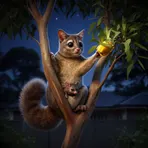
A small animal from Australia and New Guinea that lives in trees and has a pouch and a bushy tail
Surface Forms
Morphology
Trichosurus + vulpecula
This is a scientific Latin binomial: the genus 'Trichosurus' explicitly points to brushtail possums, so a learner who recognises that could infer it names a type of possum. However the species epithet 'vulpecula' is a Latin term (and not standard English vocabulary) and does not follow ordinary English compositional patterns, so the full meaning is not fully predictable to a B1 learner without prior exposure or taxonomic knowledge.
Etymology
Trichosurus vulpecula is a scientific name that comes from old Latin and Greek words: Trichosurus means 'hairy tail' and vulpecula means 'little fox', a picture of its bushy tail and fox-like face. So the name points to the common brushtail possum and helps you remember this animal.

