
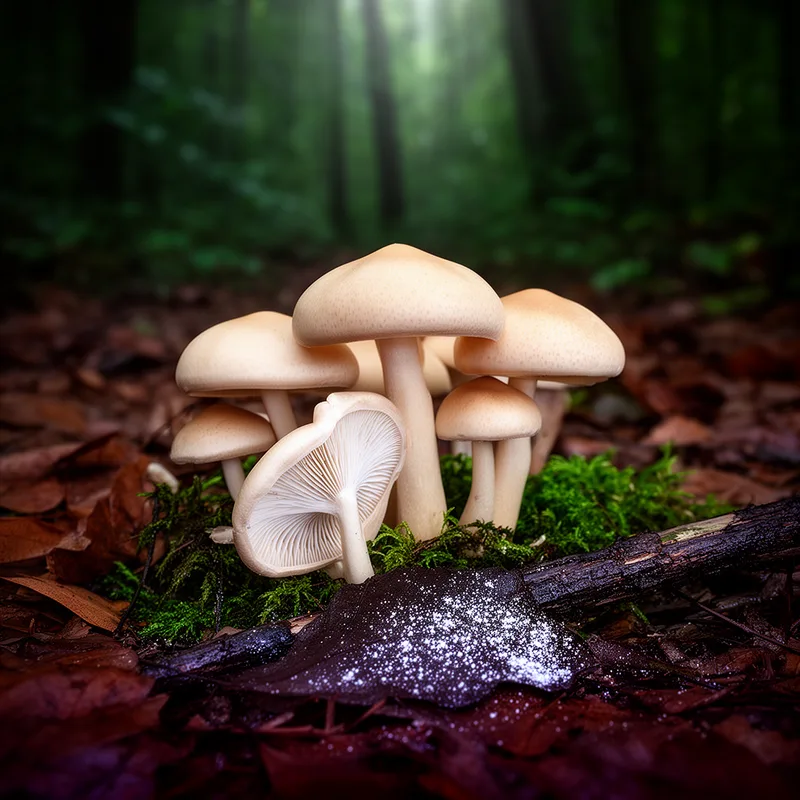
Tricholomataceae
- noun
- /ˌtrɪkəloʊməˈteɪʃiˌi/
- Specialized
- The Tricholomataceae are distinguished by their white or pale-colored spores.
Examples
-
Some genera within the Tricholomataceae are important for both culinary and ecological reasons.
-
Many species from the Tricholomataceae family are found in temperate forests.
-
Many wild mushrooms found in forests belong to the Tricholomataceae family.
-
The Tricholomataceae family includes many edible mushrooms.
-
Many wild mushrooms found in forests belong to the Tricholomataceae family.
-
The Tricholomataceae family includes many edible mushrooms.
-
Some genera within the Tricholomataceae are important for both culinary and ecological reasons.
Surface Forms
Morphology
Tricholomataceae = Tricholoma (opaque) = Tricholoma + aceae
The form is a specialized Latin taxonomic formation (genus name + '-aceae') that is not predictably meaningful to average learners.
Etymology
Tricholomataceae is made from the mushroom group name Tricholoma and the ending -aceae, which means 'family'. Tricholoma itself comes from Greek parts tricho- 'hair' and -loma 'fringe', so it described a 'hairy edge' on the mushroom cap. That's why Tricholomataceae means the family of mushrooms related to that hairy-fringe type.

