
Trichoglossus moluccanus
- noun
- Specialized
 :
Trichoglossus moluccanus
:
Trichoglossus moluccanus
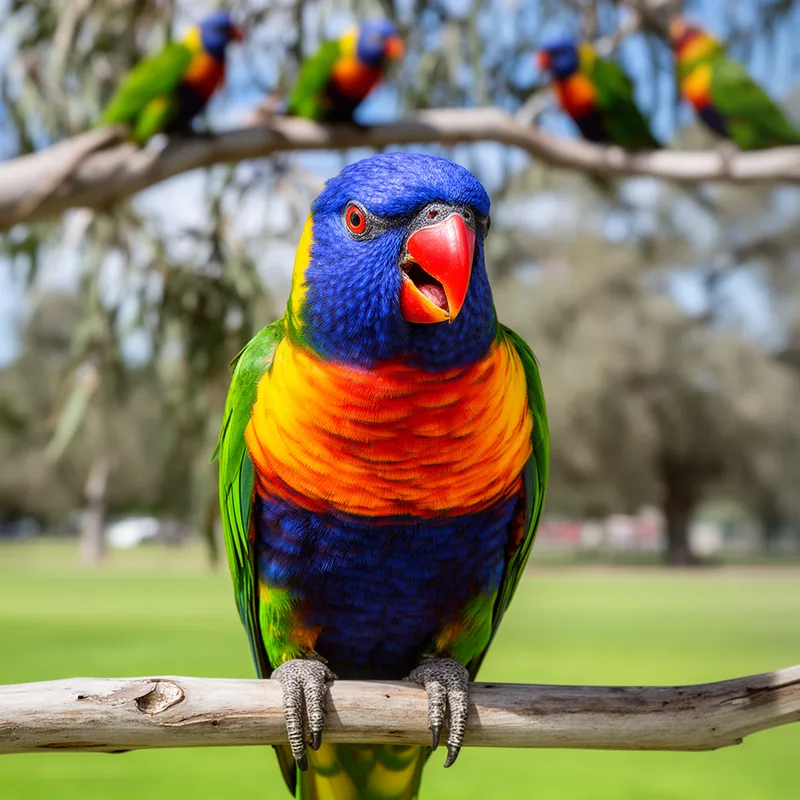
- The vivid feathers of the Trichoglossus moluccanus make it a favorite among birdwatchers in Australia.
Examples
-
A flock of Trichoglossus moluccanus can be very noisy as they gather in city parks.
-
Zookeepers often feed the Trichoglossus moluccanus a special nectar to mimic its natural diet.
-
The Trichoglossus moluccanus is known for its vibrant colors.
-
Have you ever seen a Trichoglossus moluccanus in the wild?
-
A flock of Trichoglossus moluccanus can be very noisy as they gather in city parks.
-
The vivid feathers of the Trichoglossus moluccanus make it a favorite among birdwatchers in Australia.
-
Zookeepers often feed the Trichoglossus moluccanus a special nectar to mimic its natural diet.
Synonyms

A bright, colorful parrot from Australia that often feeds on nectar
Surface Forms
Morphology
Trichoglossus + moluccanus
This is a Latin scientific name (a taxonomic label) rather than a compositional English phrase; its meaning (‘a particular species of Trichoglossus, the rainbow lorikeet’) is a conventional label and cannot be derived from ordinary knowledge of the parts by a B1 learner. The specific epithet is Latin and not transparently meaningful in everyday English, so knowing the constituent strings does not let a learner predict the species sense.
Etymology
Trichoglossus moluccanus comes from old name parts tricho and glossus which mean 'hair' and 'tongue', because the lorikeet has a brush-like tongue to lick nectar. The last part, moluccanus, links the bird to the Moluccas islands where it was first found, so the whole name helps you picture a colourful nectar-eating parrot with a 'hairy' tongue.

