
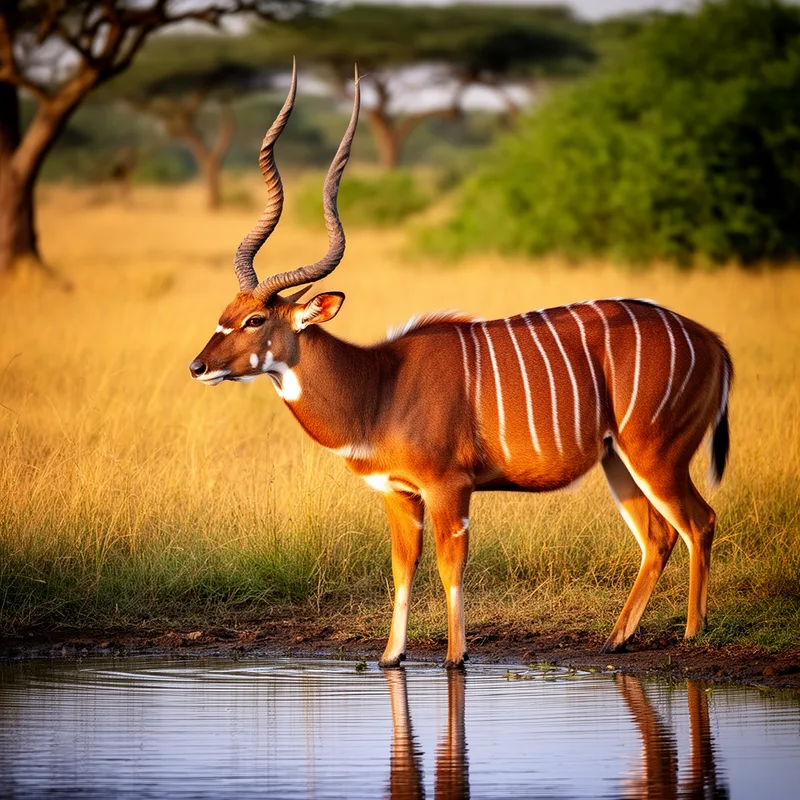
Tragelaphus scriptus
- noun
- Specialized
- The Tragelaphus scriptus, also known as the bushbuck, is famous for its striking white markings on its body.
Examples
-
The Tragelaphus scriptus is often observed near water sources in dense forests.
-
Unlike many antelopes, the Tragelaphus scriptus is highly adaptable to both woodland and savannah habitats.
-
Researchers studied the horn patterns of Tragelaphus scriptus across different regions.
-
The Tragelaphus scriptus is known for its unique markings.
-
Have you ever seen a Tragelaphus scriptus in the wild?
-
Wildlife photographers often aim to capture the beauty of the Tragelaphus scriptus in its natural habitat.
-
The Tragelaphus scriptus thrives in both wooded and open areas, making it a versatile species.
Synonyms



 1
9.9
A medium-sized African antelope with white marks and twisted horns that lives in forests and thick bushes

An African antelope with twisted horns and white bands across its body like a harness
A large African animal like a deer with white stripes on its back
Surface Forms
Morphology
Tragelaphus + scriptus
This is a Latin binomial (genus + species) functioning as a taxonomic proper name rather than a compositional English phrase; the second element 'scriptus' is not an English lexical item here. Even if a learner knew the genus 'Tragelaphus', the name does not transparently convey the specific species identity or its features, so a B1 learner could not derive the meaning from the parts.
Etymology
Tragelaphus scriptus may come from old words: Tragelaphus from Greek words for 'goat' and 'deer', and scriptus from the Latin word for 'written'. The animal's white stripes and harness-like marks look like writing on its dark coat, so the name describes this striped antelope.