
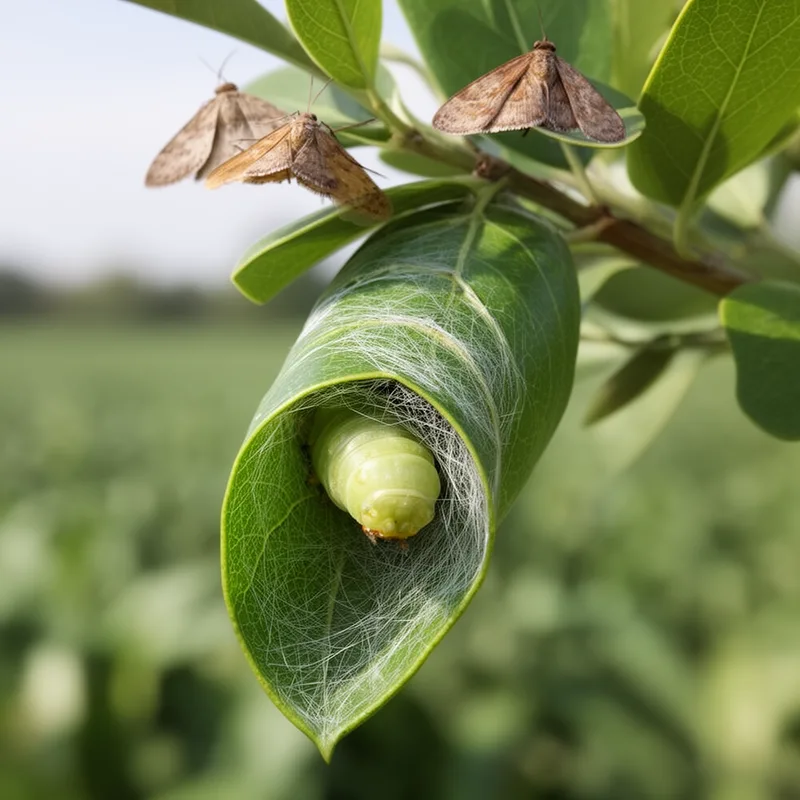
Tortricidae
- noun
- /tɔrˈtrɪsɪdi/
- Specialized
- Farmers often encounter the Tortricidae moths, which can cause damage to fruit crops by tying leaves together.
Examples
-
Likewise, most of the members of the largest group of adventive lepidopterans, the family Tortricidae (Table 5), are early spring feeders.
Academic text (1996) -
The microlepidopteran family Tortricidae accounted for 27 of the species (31%).
Academic text (2010) -
The Tortricidae family includes many species that are known for rolling leaves in their larval stage.
-
Researchers are studying how the larvae of the Tortricidae, such as the codling moth, affect the health of apple trees.
Synonyms
A large group of moths that roll leaves and often damage crops
A small moth whose caterpillars roll leaves and eat fruit
Compounds
Surface Forms
Morphology
Tortricidae = Tortrix (opaque) = tortric + idae
This is a Latinized scientific family name formed with the taxonomic suffix '-idae', which is specialized and not transparent to average learners.
Etymology
Tortricidae comes from the name Tortrix, which in turn comes from the Latin torquere meaning 'to twist'. That's easy to remember because the caterpillars in this family roll and twist leaves to make a little shelter, so the family name points to their leaf-rolling habit.

