
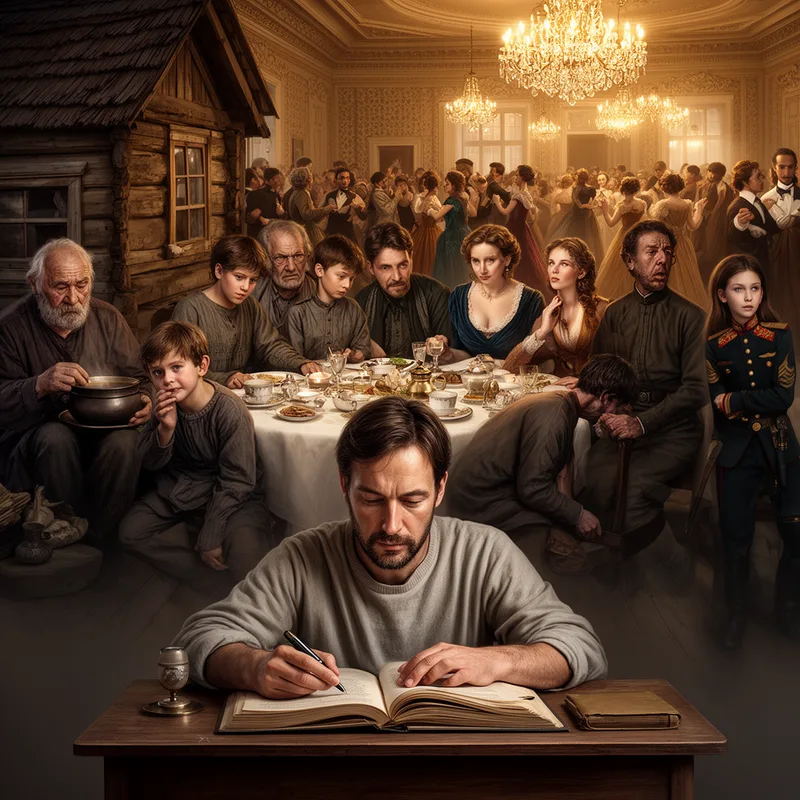
Tolstoyan


 1
8.9
- adjective
- /tɒlˈstɔɪən/
- Literature
- Many modern writers adopt a Tolstoyan approach to storytelling, focusing on deep character development and realistic portrayals of life.
Examples
-
The film's narrative style is notably Tolstoyan, emphasizing moral dilemmas and the complexities of human relationships.
-
Her paintings often reflect Tolstoyan themes, exploring the struggles of ordinary people in their everyday lives.
-
As A. N. Wilson points out in his recent biography, "Tolstoy," seven years after Tolstoy's death, when Lenin's Revolution broke out, such was the association in the world's mind of Tolstoy with revolution that the Western press erroneously described the events of 1917 as a Tolstoyan Revolution.
Academic text (1990)
Surface Forms
Morphology
Etymology
Tolstoyan comes from the name of the writer Tolstoy and is used for books or films with large, realistic scenes and a deep study of people's feelings and choices. So calling a work Tolstoyan means it resembles his style and moral focus.