
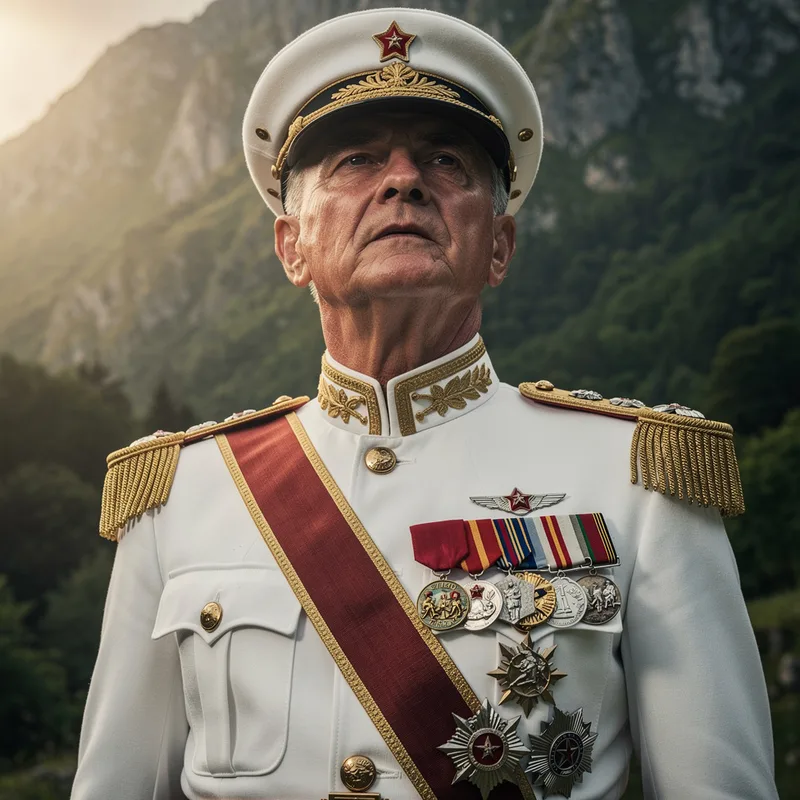
Tito
 7
7.4

- proper noun
- /ˈtiːtoʊ/
- Communist Party leader Joseph Broz Tito struck a deal with the Allies in exchange for weapons and ammunition.
- Yugoslavia under Tito
- Josip Broz Tito
- Broz Tito
Loading YouTube…
Watch on YouTubeAnd he reminds me of the figures I covered in Yugoslavia, who rose up from the swamp of Tito's decayed Yugoslavia.
- And he reminds me of the figures I covered in Yugoslavia, who rose up from the swamp of Tito's decayed Yugoslavia.
Examples
-
During World War II, Marshal Tito led the Yugoslav resistance against German occupation.
-
The Yugoslav Communist forces under Josip Broz (nicknamed Tito), with limited Allied assistance, eventually prevailed against the occupying Nazis.
Academic text (1997) -
After World War II, Tito treated the Muslims, a religious and cultural group, like an ethnic group.
Academic text (1997) -
Many of the EC leaders seemed to assume that Yugoslavia began with Tito's Communist party regime.
Academic text (1993) -
Between 1945 and 1980, Yugoslavia was ruled with an iron fist by Marshall Tito, a non-Serb Communist dictator.
Academic text (1997) -
The policies implemented by Tito helped establish a communist regime in Yugoslavia after the war.
-
After the war, Tito became a prominent leader known for his non-aligned stance during the Cold War.
Synonyms
 1
8.1
A Yugoslav leader who fought the Germans in World War II and later ruled Yugoslavia as a communist

 1
7.7
A Yugoslav leader who fought German occupation in World War II and later led the country as a communist ruler
Surface Forms
Etymology
Tito is a short, familiar form of the old Roman name Titus, a name found across Europe and Latin America. So when you hear Tito for the Yugoslav leader, it is simply his personal name, a shorter, memorable version of Titus.