
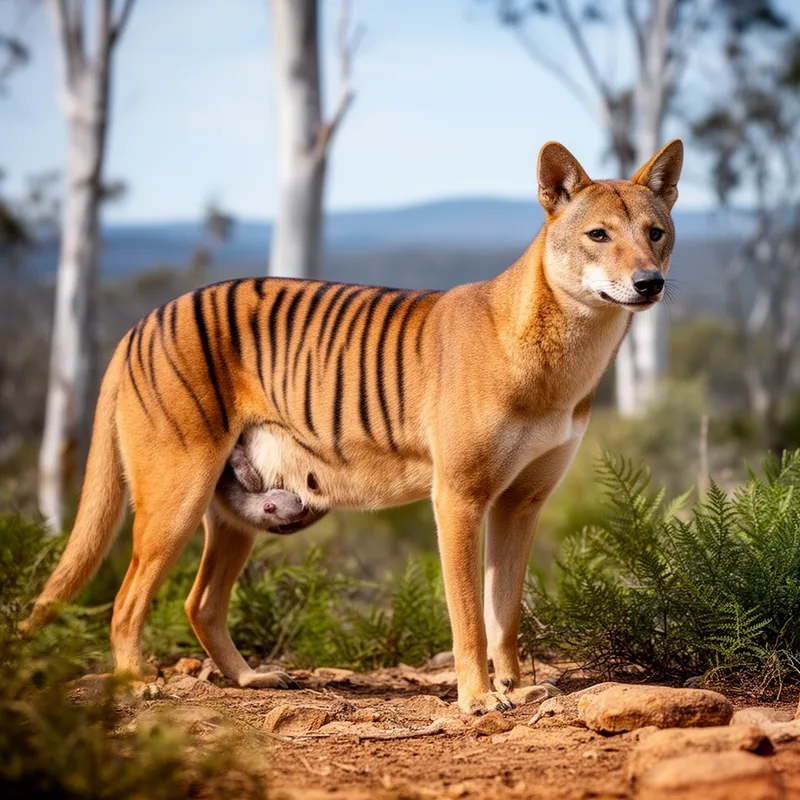
Thylacinus cynocephalus
- noun
- Specialized
- The last known Thylacinus cynocephalus died in captivity in 1936 at Hobart Zoo.
Examples
-
The striped back of Thylacinus cynocephalus gave rise to its nickname, the Tasmanian tiger.
-
Scientists still debate the ecological role played by Thylacinus cynocephalus within Tasmanian habitats.
-
The Thylacinus cynocephalus was once found throughout Tasmania.
-
Is the Thylacinus cynocephalus really extinct?
-
The last known Thylacinus cynocephalus died in captivity in 1936 at Hobart Zoo.
-
Scientists still debate the ecological role played by Thylacinus cynocephalus within Tasmanian habitats.
-
The striped back of Thylacinus cynocephalus gave rise to its nickname, the Tasmanian tiger.
Synonyms

 1
9.5
1
9.5

A doglike meat-eating animal from Tasmania with stripes and a pouch, believed extinct since the 20th century


 1
9.9
1
9.9
A doglike animal from Tasmania with stripes on its back called the Tasmanian tiger and thought to be extinct

A type of animal from Tasmania that looks like a dog, has stripes on its back, and is now extinct
Surface Forms
Morphology
Thylacinus + cynocephalus
This is a Latin scientific binomial (genus + species) rather than a normal English phrase; its function is taxonomic and not a compositional everyday meaning. One constituent ('cynocephalus') is not an English word in the entry and even knowing 'Thylacinus' as a genus does not allow a B1 learner to derive ‘the Tasmanian tiger’ from the parts. Because the term is technical and language-specific, it would be opaque to learners.
Etymology
Thylacinus cynocephalus is a scientific name made from Greek words: thylacinus meaning 'pouched' and cynocephalus meaning 'dog-headed'. This picture of a pouch-bearing, dog-like animal is why the name refers to the Tasmanian tiger (the thylacine).