
Thuja plicata
- noun
- /ˈθuːdʒə plɪˈkeɪtə/
- Specialized
- The dense wood of the Thuja plicata is prized for its resistance to rot.
Examples
-
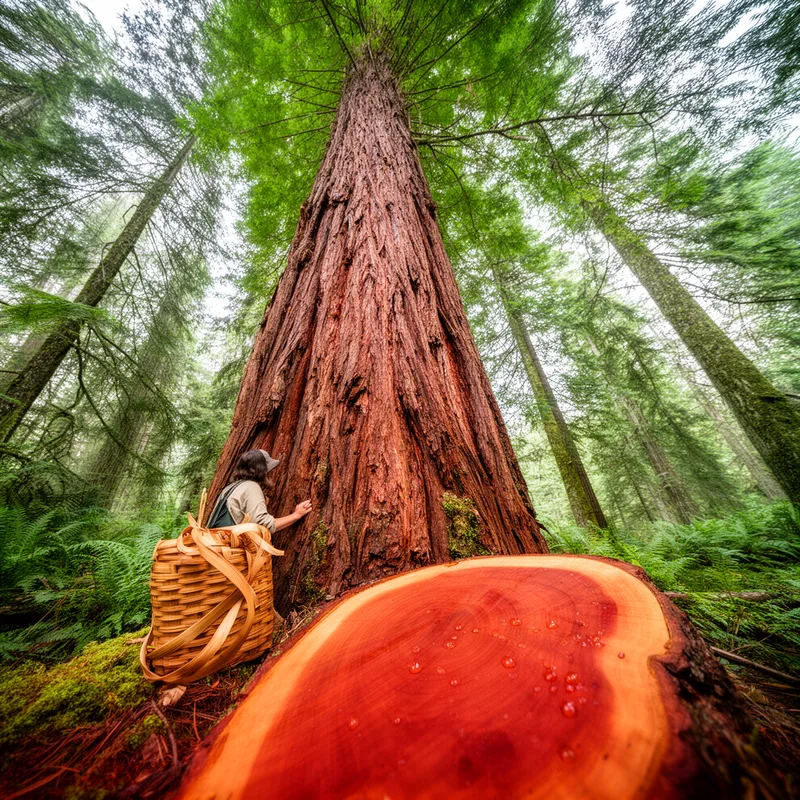
The Thuja plicata can grow over 60 meters tall in old-growth forests.
-
Native peoples have traditionally used Thuja plicata bark for weaving baskets and clothing.
-
The Thuja plicata is known for its durability.
-
Many builders prefer Thuja plicata for outdoor projects.
-
The Thuja plicata is often used in construction due to its strong and durable timber.
-
In gardens, Thuja plicata provides a beautiful evergreen backdrop with its lush foliage.
-
Landscape architects frequently choose Thuja plicata for its aromatic wood and resistance to pests.
Synonyms

 1
5.8
1
5.8

A large evergreen tree with reddish durable wood used for building and furniture

A very large evergreen tree with strong wood that people use to make canoes
Surface Forms
Morphology
Thuja + plicata
This is a Latin binomial: knowing 'Thuja' (a type of evergreen tree) allows a learner to infer the phrase refers to a particular species of Thuja, but the specific epithet 'plicata' is a Latin taxonomic label (and is not a transparent English word) so it does not convey the common name or properties (e.g. western red cedar, timber, aromatic wood). Because the expression partly indicates a subtype of Thuja but does not transparently yield the full common-language meaning, it is only partially predictable to a B1 learner.
Etymology
Thuja plicata gets its name from older words: Thuja is linked to a Greek word for trees burned as 'incense', and plicata is Latin for 'folded', like the tree's flat, layered leaves. So the name points to its strong smell and folded leaf shape and helps you remember this large, aromatic tree called 'western red cedar'.