

Thrinax keyensis
- noun
- Specialized
- The Thrinax keyensis can be seen thriving in the coastal hammocks of south Florida.
Examples
-
The small white fruits of the Thrinax keyensis attract a variety of birds.
-
Gardeners value Thrinax keyensis for its resilience to salty conditions and strong winds.
-
The Thrinax keyensis is commonly found in coastal areas.
-
Did you know that Thrinax keyensis can tolerate saltwater?
-
Gardeners value Thrinax keyensis for its ability to thrive in coastal environments with salty conditions.
-
You can find the Thrinax keyensis in the lush coastal hammocks throughout southern Florida.
-
Birds are often attracted to the small, sweet fruits produced by the Thrinax keyensis.
Synonyms

A small fan-shaped tree that grows in southern Florida and Cuba
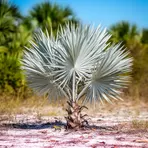
A small fan palm with silvery leaves that grows in southern Florida and Cuba
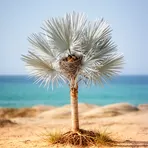
A small palm tree with silvery leaves
Surface Forms
Morphology
Thrinax + keyensis
This is a scientific Latin binomial (genus + specific epithet). The second element 'keyensis' is not a common English word and encodes a Latin formation (typically ‘from the Keys’), a morphological pattern B1 learners are unlikely to know; even knowing 'Thrinax' as a palm genus does not let a learner reliably derive the species-level meaning without specialist/taxonomic knowledge.
Etymology
Thrinax keyensis may come from Greek and a place name: Thrinax suggests a three-part shape like a small trident and helps you picture the fan-shaped leaves. Keyensis means 'from the Keys', so the name points to a fan palm from the Florida Keys.

