
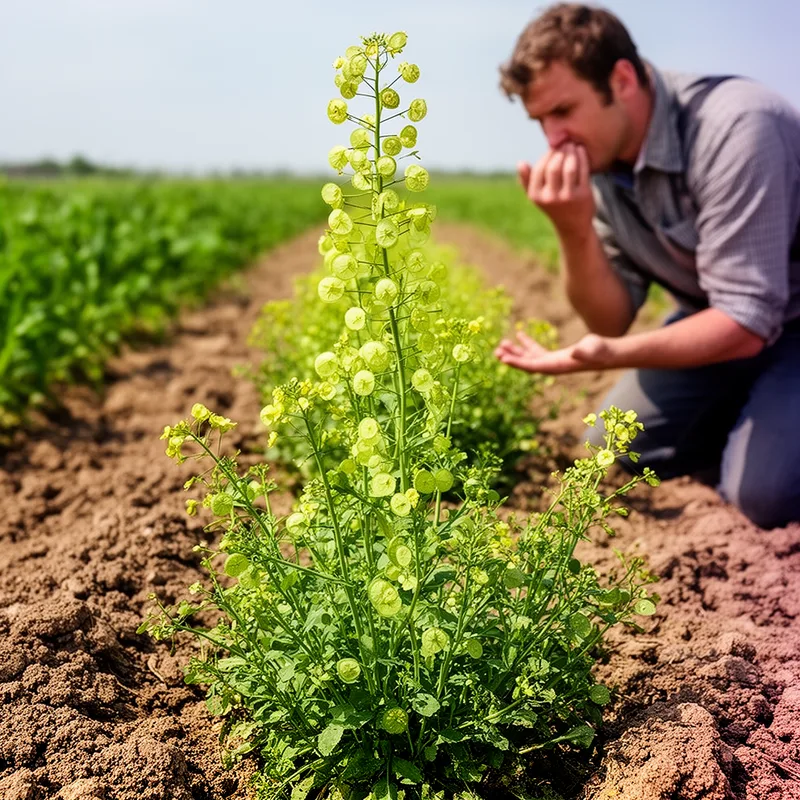
Thlaspi arvense
- noun
- Specialized
- The distinctive flat seed pods make Thlaspi arvense easy to identify in fields and gardens.
Examples
-
Farmers try to control Thlaspi arvense because it can become a serious agricultural weed.
-
Many gardeners consider Thlaspi arvense a nuisance due to its rapid growth and foul smell.
-
Thlaspi arvense spreads easily in disturbed soils, often outcompeting native plants.
-
Look at the Thlaspi arvense!
-
I found Thlaspi arvense growing in my garden.
-
Thlaspi arvense can quickly take over farmland, making it difficult for crops to thrive.
-
The presence of Thlaspi arvense indicates disturbed soils, where it often emerges as a persistent weed.
Synonyms

 1
9.0
1
9.0

A smelly weed with round flat seed pods
A wild plant with a strong smell and round flat seed pods

A smelly weed with round flat seed pods that grows in fields

A small plant with white flowers and flat round seed pods

A smelly weed with round flat seed pods from Europe and Asia now growing in North America
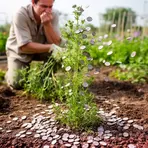
A plant with a bad smell and flat round seed pods that spread easily

A weed from Europe and Asia with a strong smell and round flat seed pods now common in North America
Surface Forms
Morphology
Thlaspi + arvense
This is a Latin binomial combining the genus 'Thlaspi' (pennycress) with a species epithet; a learner who knows the constituents would likely infer it names a type of plant (i.e. a field pennycress). However, the use of a specialized Latin epithet and botanical specificity makes the full lexical and descriptive sense non-obvious to an average B1 learner, so the transparency is only partial.
Etymology
Thlaspi arvense may come from old plant words: Thlaspi points to its flat, round seed pods like small coins and arvense means 'from the fields'. That's why the name gives a simple picture of a small field weed with coin-like pods, which helps you remember it.