
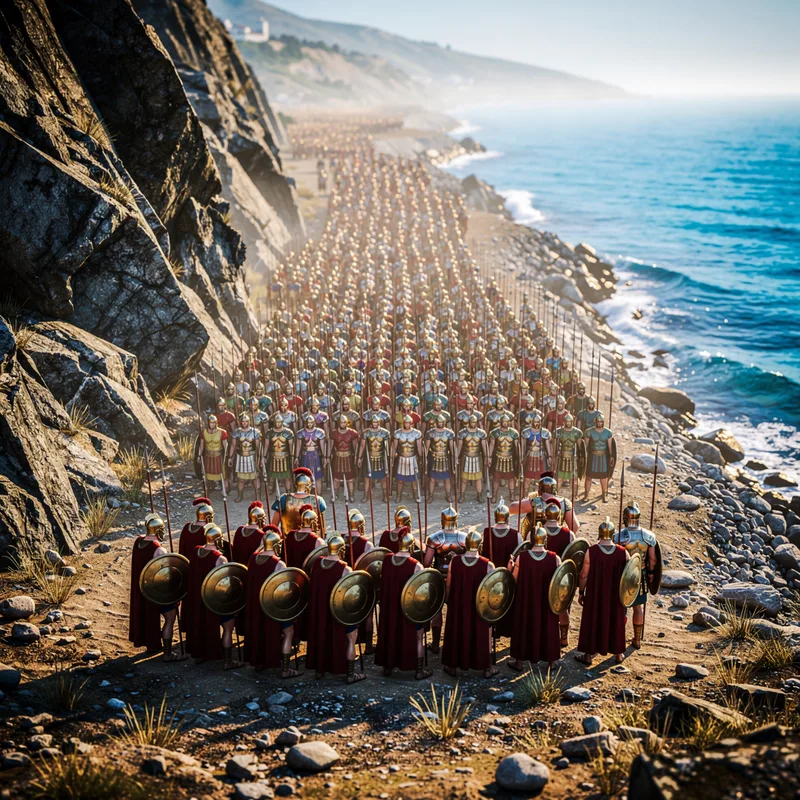
Thermopylae
 3
9.9

- proper noun
- /θərˈmɒpɪliː/
- The battle of Thermopylae is remembered for the courage of the Spartan warriors.
- Thermopylae and Salamis
Loading YouTube…
Watch on YouTubeSo he says, you know, think about, and he's bringing a battlefield courage marathon, Salimus Plataea, Thermopylae, right.
- So he says, you know, think about, and he's bringing a battlefield courage marathon, Salimus Plataea, Thermopylae, right.
- We were watching this show about the Battle of Thermopylae and, and it was like all about, you know, valor and glory on the battlefield.
- They quote the latest poem whilst advancing on the walls of Quebec, make jokes on scaffolds and comb their hair at the gates of Thermopylae.
- And, and I think it's that sort of that, that warrior mentality, the same thing that the, you know, the Spartans called on when the day three at Thermopylae, whatever.
Examples
-
In 480 BC, King Leonidas and his troops made their last stand at Thermopylae against the Persian army.
-
We will live forever, like the Spartans at Thermopylae, in sacred memory.
Blog text (11) -
There was once a battle at a place called Thermopylae.
-
What happened to the warriors at Thermopylae?
-
I'm standing here at Thermopylae.
-
I think it refers to the battle of Thermopylae... where the 300 Spartans died trying to hold the pass... if you remember your Greek history, sir.
-
I responded to the Persian army's demand that the Spartans surrender their weapons at the Battle of Thermopylae.
Blog text (23) -
Leonidas's stand at the "hot gates" of Thermopylae serves today as a symbol of heroic resistance against insurmountable odds.
Academic text (2002) -
In 480 BCE, Leonidas, King of Sparta, defended the pass at Thermopylae against the Persian army of King Xerxes.
Academic text (1995) -
Historical accounts describe how the small Greek force at Thermopylae bravely resisted overwhelming odds.
Compounds
 1
9.4
A famous 480 BC battle where a small Greek force led by Leonidas resisted a much larger Persian army
Surface Forms
Etymology
Thermopylae comes from Greek parts thermo- meaning 'hot' (as in thermal) and -pylae meaning 'gates', so the name means 'hot gates' and refers to warm springs at a narrow mountain pass. That's why Thermopylae is the famous narrow pass where King Leonidas and his small Greek force held back a much larger army.