
Theodosian


 1
9.9
- adjective
- /θiˈoʊdəʊʃən/
- Formal
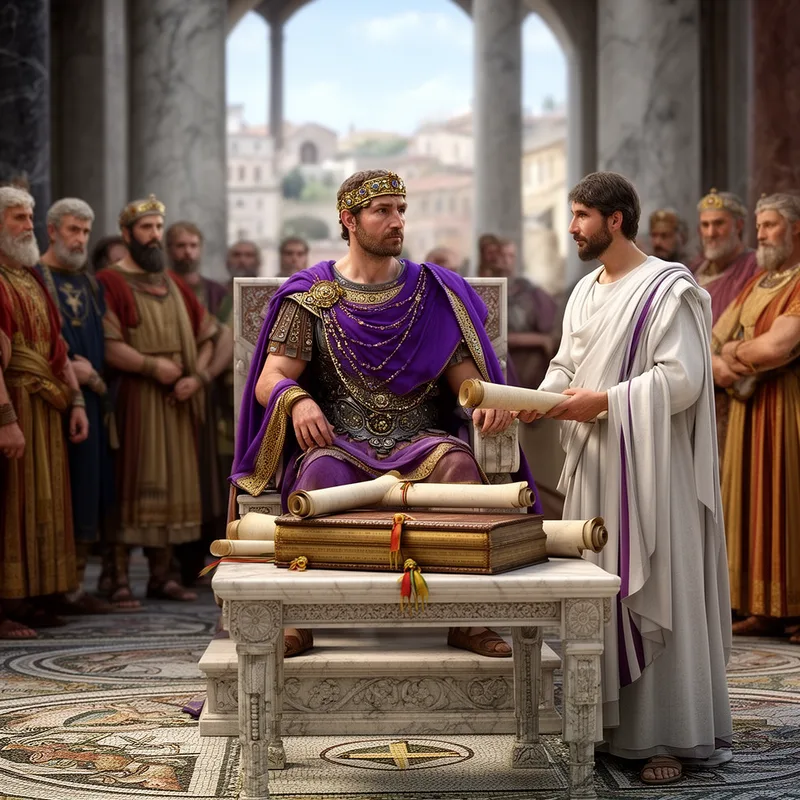
- The Theodosian Code provided a legal framework that reflected the beliefs of the time.
Loading YouTube…
Watch on YouTubeOn the one side, the land side, the Theodosian walls, are the Avars and the Slavs on the Bosphorus.
- On the one side, the land side, the Theodosian walls, are the Avars and the Slavs on the Bosphorus.
Examples
-
The Theodosian Walls were built to fortify the city against invasions during the reign of Theodosius.
-
Section of the Theodosian Wall
Blog text (32) -
The massive triple layered Theodosian walls had not yet been built.
-
Three square kilometers of this area were in the historic city center circumscribed by the Theodosian Walls.
Academic text (2004) -
Church historians are individual authors with divergent views, whose works illustrate the intellectual richness of the Theodosian age.
Academic text (2018) -
But there are successive laws against the practice in the Theodosian Code (7.13.5 / 7.13.10 / 7.22.1), indicating that the problem was ongoing.
Blog text (31) -
By 381, Theodosius I had made a series of pronouncements that were part of the complex process of establishing Nicene Christianity as the state religion of the Roman Empire; yet the consequences of the Theodosian establishment were still being worked out, with even more religious strife on the horizon.
Academic text (2018) -
Historians often study the Theodosian era to understand the shifts in religious policies within the Roman Empire.
Surface Forms
Morphology
Theodosian = Theodosius (semi-transparent) = Theodosius + ian
Formed by adding the productive suffix '-ian' to the proper name 'Theodosius'; the formation is clear but requires knowledge of the historical name for full interpretation.
Etymology
Theodosian comes from the name Theodosius, a Roman emperor whose name begins with theo- 'god', the same root as theology. So Theodosian means 'of or about Theodosius' or things from the time when he ruled, which is why we use it for laws and events of his period.