
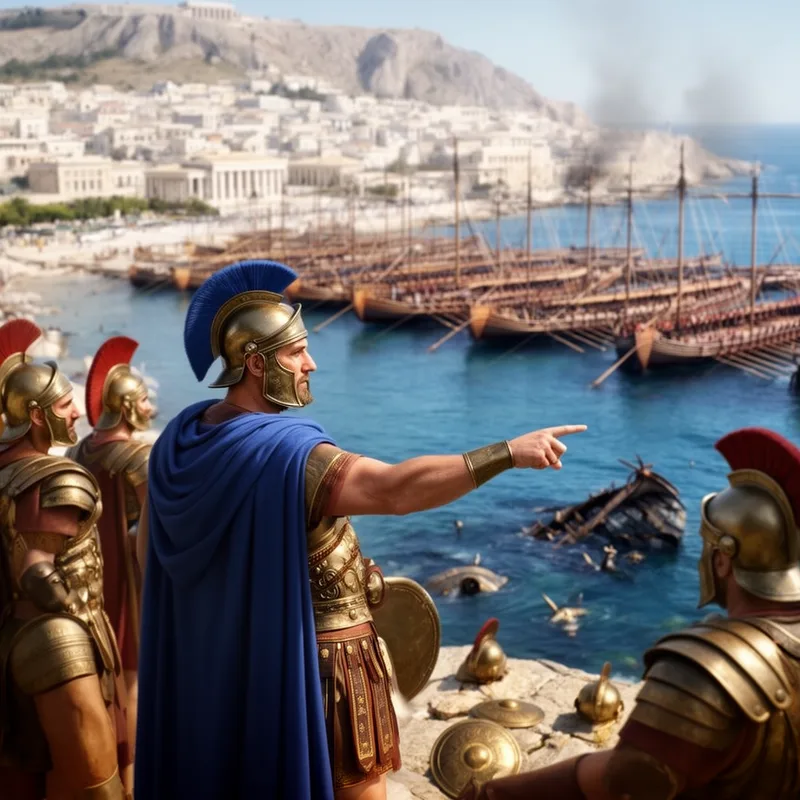
Themistocles


 1
9.9
- proper noun
- /θəˈmɪstəˌkliz/
- The Themistocles played a crucial role in shaping the future of Athenian democracy and military strength.
Examples
-
Elsewhere, he discusses the rhetorical exercises of his youth in which he was successively Xerxes and Themistocles, Octavius and Mark Antony: "they intoxicated me; I felt like Proteus."
Fiction book (1996) -
The Themistocles is celebrated for his strategic leadership that led Athens to victory in the naval Battle of Salamis.
-
-Themistocles, sir.
-
According to Plutarch's Life of Aristides, a difference over this with his rival Themistocles was a dominating factor in the early part of Aristides' career.
Academic text (1997) -
Here are three sources: Aeschylus' Persians, Herodotus' History, and Plutarch's Life of Themistocles, containing almost all the information we possess upon the portion of the battle dealt with in the source book.
Academic text (1994) -
The civilization of Europe, America, and Australia exists today at all only because of the victories of civilized man over the enemies of civilization, because the victories stretch through the centuries from the days of Miltiades and Themistocles to those of Charles Martel in the eighth century and those of John Sobieski in the seventeenth century.
Blog text (21) -
The Themistocles argued passionately for the expansion of the Athenian navy to counter the Persian threat.
Surface Forms
Etymology
Themistocles is an old Greek name made of Themis meaning 'law' (and the name of the goddess of law) and -clēs meaning 'glory', the same ending you see in Pericles. So the name means something like 'glory of the law' or 'famous for justice', which suits his role as a leading Athenian statesman.