

Thelypteris palustris
- noun
- Specialized
- In wetlands across the northern temperate regions, Thelypteris palustris exhibits deeply divided fronds.
Examples
-
If you see a fern with pinnatifid fronds near a pond, it may be Thelypteris palustris.
-
Thelypteris palustris is often found thriving in boggy meadows and marshy woodlands.
-
Many wildlife reserves protect the fragile habitat of Thelypteris palustris.
-
The Thelypteris palustris thrives in wetland areas.
-
Have you seen the Thelypteris palustris in this park?
-
Thelypteris palustris is commonly found in wetland areas, where it flourishes among other aquatic plants.
-
Conservation efforts focus on protecting habitats where Thelypteris palustris grows alongside other ferns.
Synonyms
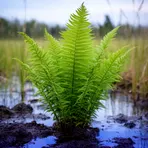
A fern with finely divided fronds that grows in marshes and other wet places in northern regions

A fern with deeply divided leaves that grows in wet places like marshes
Surface Forms
Morphology
Thelypteris + palustris
This is a compositional Latin binomial: Thelypteris names a fern genus and palustris (Latin for 'of the marsh') denotes a marshy habitat, so the overall meaning 'a marsh/wetland fern species' is directly derivable from the constituents. While botanical Latin may be unfamiliar to many learners, if a learner knows both parts the species meaning is transparently predictable.
Etymology
Thelypteris palustris may come from Greek and Latin words: Thelypteris uses the Greek 'pteris' meaning 'fern', and palustris is Latin for 'marsh'. So the name literally says 'marsh fern', which explains why this plant is found in wetlands.

