
Thea


 1
9.9
- proper noun
- /ˈθiːə/
- Literature
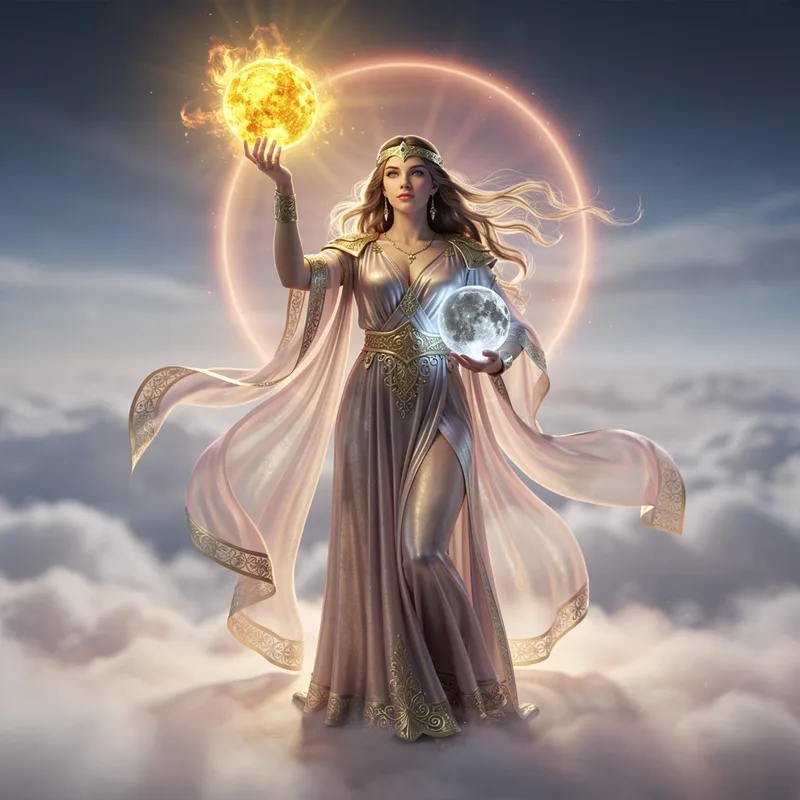
- The Titaness Thea is often regarded as the mother of the Sun, the Moon, and the Dawn in Greek mythology.
Examples
-
Many artists have depicted Thea alongside her children, Helios, Selene, and Eos, in their works.
-
In ancient stories, Thea was revered for her beauty and maternal connections to celestial bodies.
-
I was already on my way when Thea called.
-
"Hurry up," Thea called to us.
Fiction book (2000) -
His email was friendly, and he included a picture of him with his wife, Thea, and their two sons.
Blog text (25) -
Thea, where have you been?
-
If my mother had been one of the passengers, she would have demanded Thea pull over.
Fiction book (2000) -
Upon meeting David and Thea, they had warm smiles and gave all of us big hugs.
Blog text (25) -
After Thea turned off the parkway, she kept right on speeding.
Fiction book (2000) -
Thea put the dog down on the floor in front of Quinn.
Fiction book (2000)
Synonyms
 1
9.9
A Greek goddess who is mother of the sun, moon, and dawn
Surface Forms
Etymology
The word Thea comes from the ancient Greek word thea meaning 'goddess' and is related to theos 'god', the same root you see in theology. So, as the mother of the sun, moon and dawn, Thea is a name that means a 'divine' or 'goddess' figure.