
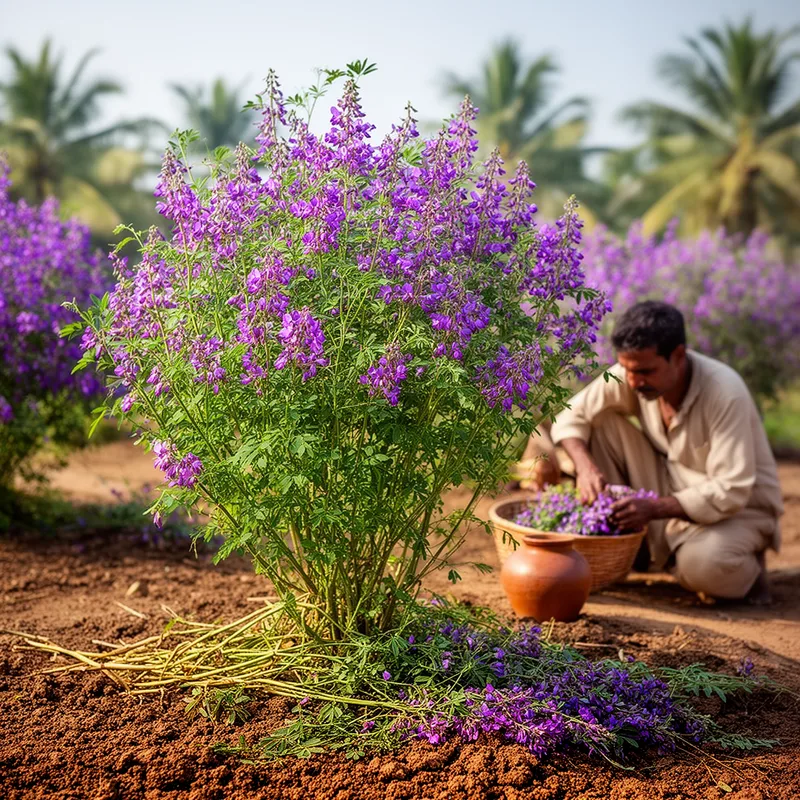
Tephrosia purpurea
- noun
- Specialized
- Farmers often grow Tephrosia purpurea to improve soil fertility through green manuring.
Examples
-
Tephrosia purpurea is widely used in Ayurvedic medicine for treating various ailments.
-
The delicate purple blooms of Tephrosia purpurea can be seen across the Indian countryside.
-
The Tephrosia purpurea plant is known for its medicinal properties.
-
Farmers often use Tephrosia purpurea as green manure.
-
Tephrosia purpurea is commonly used in traditional medicine to help treat digestive disorders.
-
Many traditional healers utilize Tephrosia purpurea for its reputed healing effects on skin diseases.
-
The seeds of Tephrosia purpurea are often sown to enhance soil quality as a natural fertilizer.
Surface Forms
Morphology
Tephrosia + purpurea
This is a Latin binomial (genus + species) used as a technical taxonomic name; knowing 'Tephrosia' only identifies a genus label and 'purpurea' is not a common English word here, so an average B1 learner would not derive the plant description or uses from the parts. Even if one recognised 'purpurea' as a Latin root meaning 'purple', that would at best suggest flower colour and would not yield the full botanical/medicinal meaning, so the expression is not compositionally transparent for learners.
Etymology
Tephrosia purpurea comes from old words about colour: Tephrosia comes from a Greek word meaning 'ash-coloured' and purpurea is Latin for 'purple'. So, the name gives an easy image, a small bush with pale purple flowers, which helps you remember this medicinal plant that farmers also grow to improve soil.

