
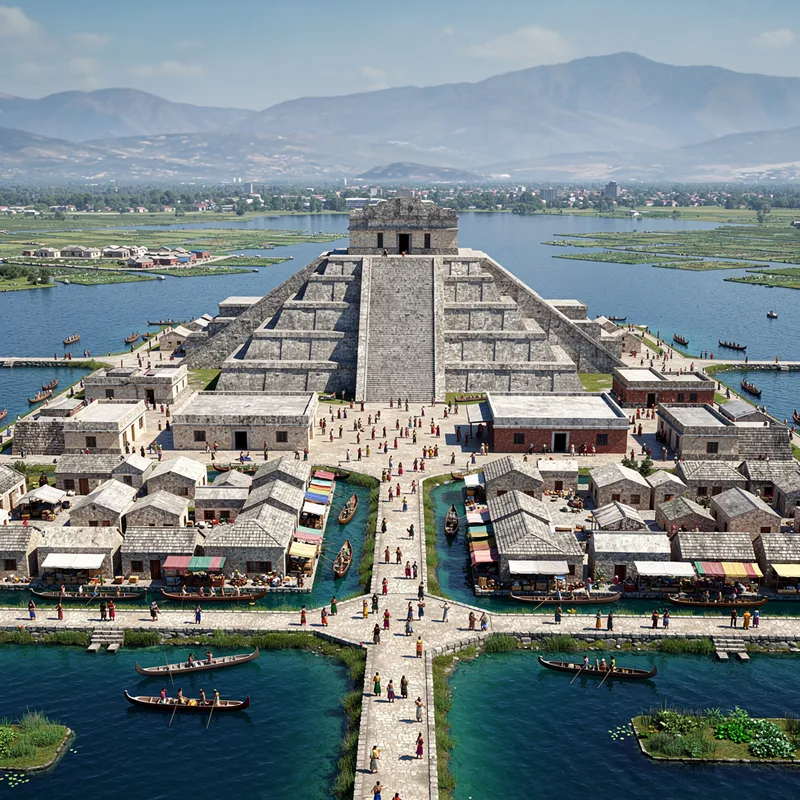
Tenochtitlan
 1
9.9

- proper noun
- /ˌtɛnoʊkˈtɪtlən/
- Mexico City t-today stands on the ruins of the Aztec capital, Tenochtitlan.
- the capital of Tenochtitlan
- the Aztec capital
- the siege of Tenochtitlan
Examples
-
In Tenochtitlan, intricate canals facilitated transportation and agriculture for its large population.
-
Cortes, the Spanish invader, conquered the Aztecs in the 16th century, taking over Tenochtitlan, the capital.
Blog text (27) -
Moving on, the Spanish arrived in Tenochtitlan on November 8.
Academic text (1992) -
When the Spanish returned three months later, the people of Tenochtitlan were dying of smallpox.
Fiction book (1992) -
Because it was an item imported into Tenochtitlan, the capital of the Aztec Empire, it was especially desirable.
Academic text (2011) -
When the conquering Spaniards arrived in the early sixteenth century, long lines of trade extended out of Tenochtitlan, the Aztec capital in central Mexico.
Academic text (1996) -
By the time of European contact, 150,000 to 200,000 people inhabited Tenochtitlan, and its metropolitan area contained some 400,000 inhabitants. 1400-1519
Academic text (1992) -
Even before the arrival of the Spanish, the Zapotecs and Mixtecs were subject to the Aztecs of Tenochtitlan (today's Mexico City), to whom they were required to deliver a part of their resources in tribute.
Academic text (2006) -
The Great Temple, located in the heart of Tenochtitlan, represented the religious significance of the Aztec empire.
-
The ruins of Tenochtitlan are an important archaeological site that attracts thousands of visitors each year.
Surface Forms
Etymology
Tenochtitlan comes from the Nahuatl language and means 'place of the prickly pear cactus', combining tēnōchtli ('prickly pear') and -tlan ('place of'). The name fits the ancient city built on a small island and helps you remember the famous story and the Mexican flag that shows an eagle on a cactus on a rock.