
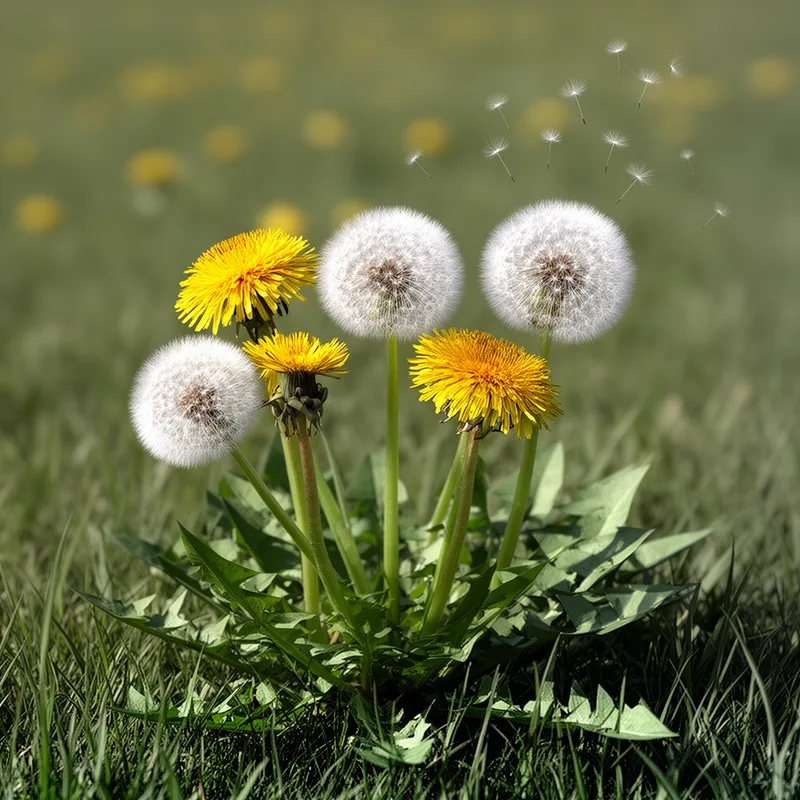
Taraxacum
- noun
- /təˈræk.sə.kəm/
- Specialized
- The Taraxacum plant is often used in herbal remedies for its health benefits.
- Taraxacum officinale
- the dandelion (Taraxacum)
Examples
-
Automatically as breathing, she murmured the name of each weed as she tossed it into a pile by the open driveway gate: Ambrosia artemisiifolia, Convolvulus arvensis, Taraxacum officinale.
Fiction book (2002) -
The most frequently encountered plant species were bramble (Rubus fruticosus), dandelion (Taraxacum agg.), and sycamore (Acer pseudoplatanus).
Academic text (2012) -
Many children love to blow the seeds of Taraxacum dandelions and watch them scatter in the wind.
-
In spring, gardens are filled with bright yellow flowers from the Taraxacum, commonly known as dandelions.
Synonyms
A group of flowering plants that includes dandelions
Compounds

- Specialized
A dandelion from Kazakhstan grown for thick roots that contain natural rubber
- Specialized
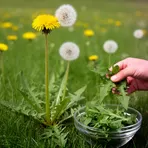
A common wild plant with yellow flowers and fluffy seed heads whose leaves are eaten in salads

- Specialized
A dandelion from Europe and Asia that grows wild in North America with edible leaves and roots
Surface Forms
Etymology
Taraxacum comes from an old Greek word taraxakon, linked to tarasso meaning 'to disturb'. Because people used the plant as a medicine that could 'disturb' the stomach, the name stuck, and today Taraxacum is the scientific name for the common dandelion.

