
Tarascan
- proper noun
- /ˈtærəskən/
- In fact, the grave goods he collected were made by a constellation of cultures that predated the Tarascan kingdom by a millennium; today, they are broadly designated as West Mexican.
Examples
-
While the most widely accepted theory is that erosion was caused by overpopulation in the Postclassic (A.D. 900-1520) Tarascan Empire, Fisher found the erosion was more significant after the Tarascans abandoned the land during Spanish occupation, suggesting their terraced fields served an important ecological function.
Academic text (2008) -
Similarly, when several "Tarascan" effigies were included in the Museum of Modern Art's exhibition.
Academic text (2000) -
Helen Pollard and Thomas Vogel discuss the utilization of obsidian sources in the independent Tarascan state.
Academic text (1997) -
Their use of masks, plus the fact that such a number of them should adopt the name of what in the Bible is but a single character, is evidence of a syncretism to be understood only in the context of Tarascan ceremonialism.
Academic text (1990) -
Although now only a small town, Tzintzuntzan still retains a certain prestige of priority, having once been the ancient Tarascan capital and a favorite spot of Tata Vasco.
Academic text (1990) -
On the morning of Good Friday, 28 March 1986, the authors of this paper found themselves in Morelia, Michoacan, ready to initiate an exploratory field survey of the Judas clown troops that appear during Holy Week in some of the Tarascan-Mestizo towns on Lake Patzcuaro.
Academic text (1990) -
While the most widely accepted theory is that erosion was caused by overpopulation in the Postclassic (A.D. 900-1520) Tarascan Empire, Fisher found the erosion was more significant after the Tarascans abandoned the land during Spanish occupation, suggesting their terraced fields served an important ecological function.
Academic text (2008) -
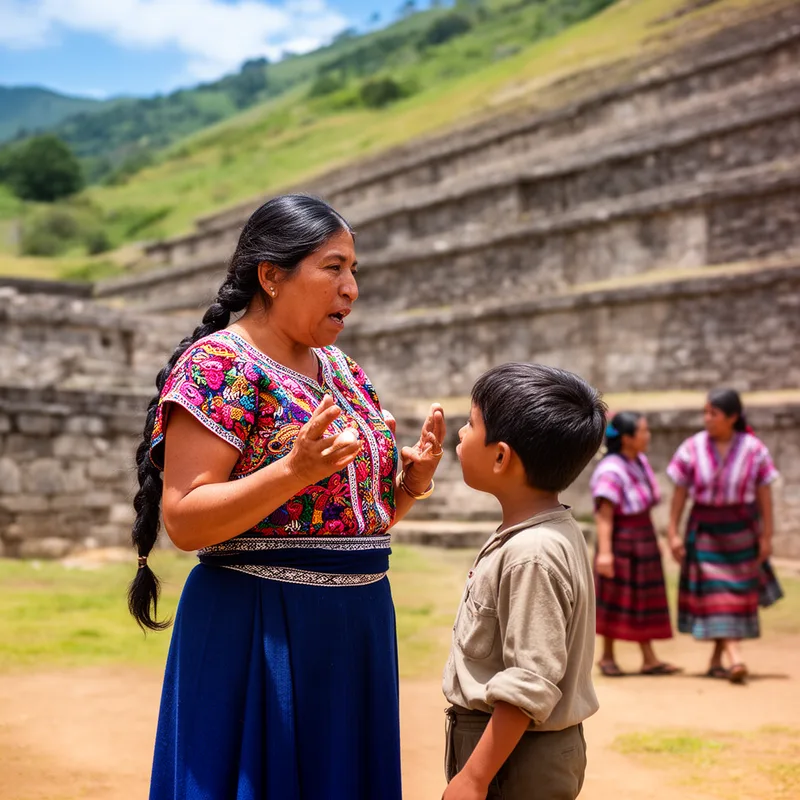
The Tarascan people are known for their rich cultural traditions and vibrant festivals.
-
Many scholars study the Tarascan language to understand its unique structure and history.
-
The history of the Tarascan community in western Mexico is marked by their resilience and adaptation.
Surface Forms
Etymology
Tarascan comes from the Spanish word tarasco, the name the Spanish gave to the people who call themselves Purépecha in Michoacán, Mexico. So a Tarascan is 'a member of that indigenous people' or 'the language they speak'.

