
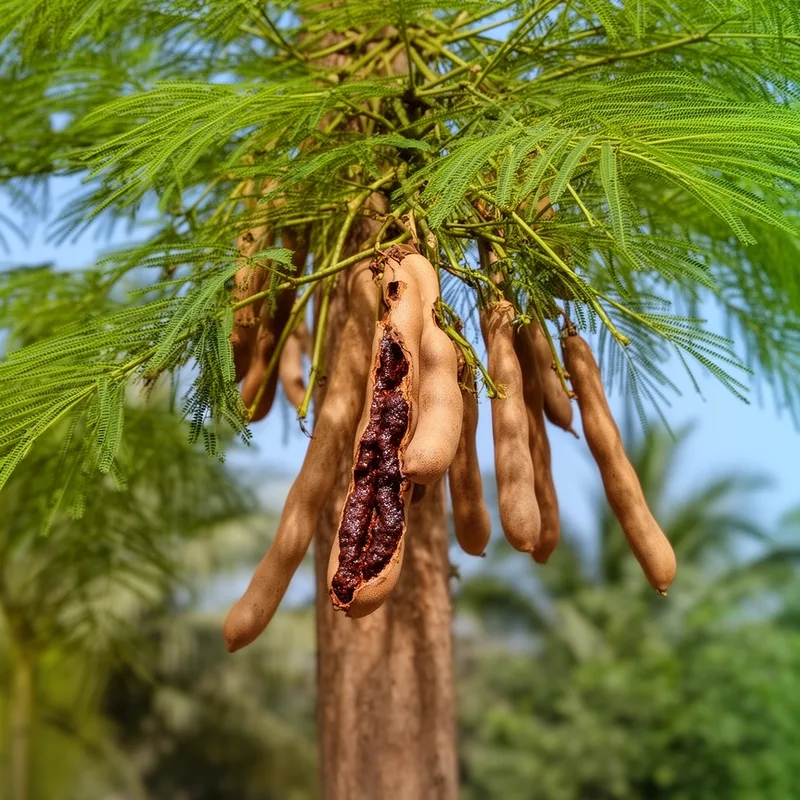
Tamarindus indica
- noun
- /ˌtæməˈrɪndəs ˈɪndɪkə/
- Specialized
- The fruit of Tamarindus indica is widely used in cuisines around the world.
Examples
-
Many traditional medicines incorporate the pulp of Tamarindus indica due to its medicinal properties.
-
The Tamarindus indica tree can grow up to 80 feet tall.
-
Botanists studied the growth patterns of Tamarindus indica in tropical climates.
-
Have you ever tasted the pulp from a Tamarindus indica pod?
-
The Tamarindus indica tree produces long pods filled with a sweet and tangy pulp.
-
In many countries, the Tamarindus indica is valued for its shade and culinary uses.
-
The leaves of the Tamarindus indica tree are often used in salads and sauces.
Synonyms

 5
5.8
5
5.8

A tropical tree with long seed pods and sour fruit used in cooking

A tree in hot countries that makes long pods with sour edible pulp

A tropical tree that makes long seed pods with sour edible pulp used in cooking
Surface Forms
Morphology
The name combines the genus 'Tamarindus' (a tree with edible fruit) and the species epithet 'indica' (indicating origin in India), so a learner who knows both constituents can infer this is the tamarind tree species from India. The construction follows a regular taxonomic composition (genus + specific epithet), making the meaning directly derivable rather than idiomatic.
Etymology
Tamarindus indica comes from old words meaning 'Indian date'. People long ago thought the sour fruit looked like a small date and came from India, so the name points to the tree and its long, sour pods.