
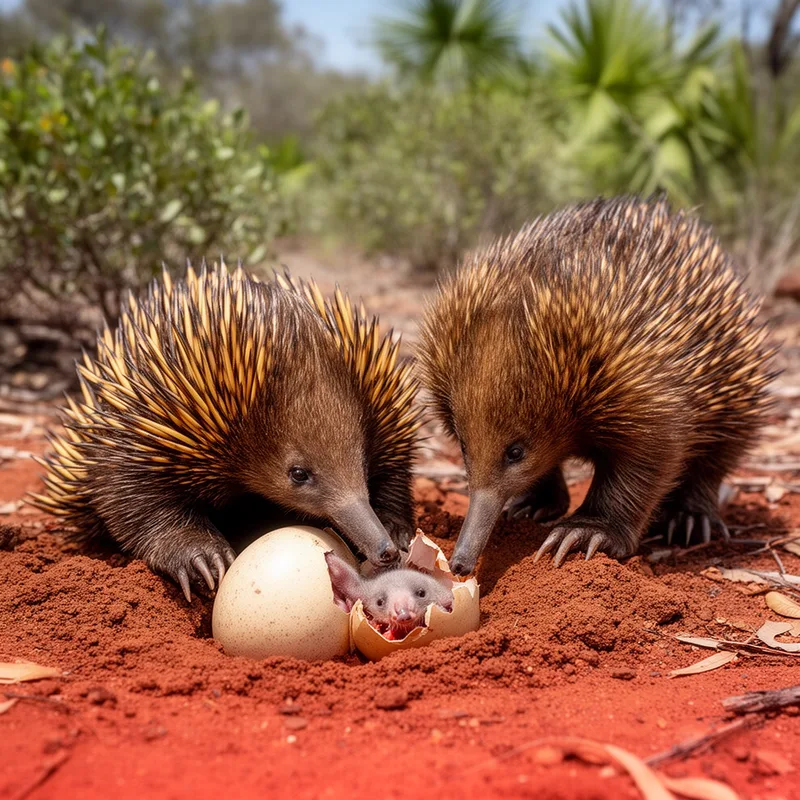
Tachyglossidae
- noun
- /ˌtækɪˈɡlɒsɪdi/
- Specialized
- The Tachyglossidae are unique among mammals for laying eggs instead of giving birth to live young.
Examples
-
The Tachyglossidae family includes several species of echidnas.
-
All known species of Tachyglossidae are found in Australia and New Guinea.
-
Scientists study the Tachyglossidae to better understand evolutionary links between reptiles and mammals.
-
Have you ever seen a Tachyglossidae in the wild?
-
All known species of Tachyglossidae are found in Australia and New Guinea.
-
The Tachyglossidae family includes several species of echidnas.
-
Scientists study the Tachyglossidae to better understand evolutionary links between reptiles and mammals.
Surface Forms
Morphology
Tachyglossidae = Tachyglossus (opaque) = Tachyglossus + idae
A Latinized scientific family name formed from the genus name plus the taxonomic suffix '-idae'; the components are specialized combining forms and the taxonomic meaning is not derivable by an average B1 learner.
Etymology
Tachyglossidae comes from the Greek parts tachy- 'fast' and gloss- 'tongue', with -idae showing it is an animal family. It names the family of echidnas, or spiny anteaters, because they use a long, very quick tongue to catch ants, so the name means 'fast-tongued' animals.

