
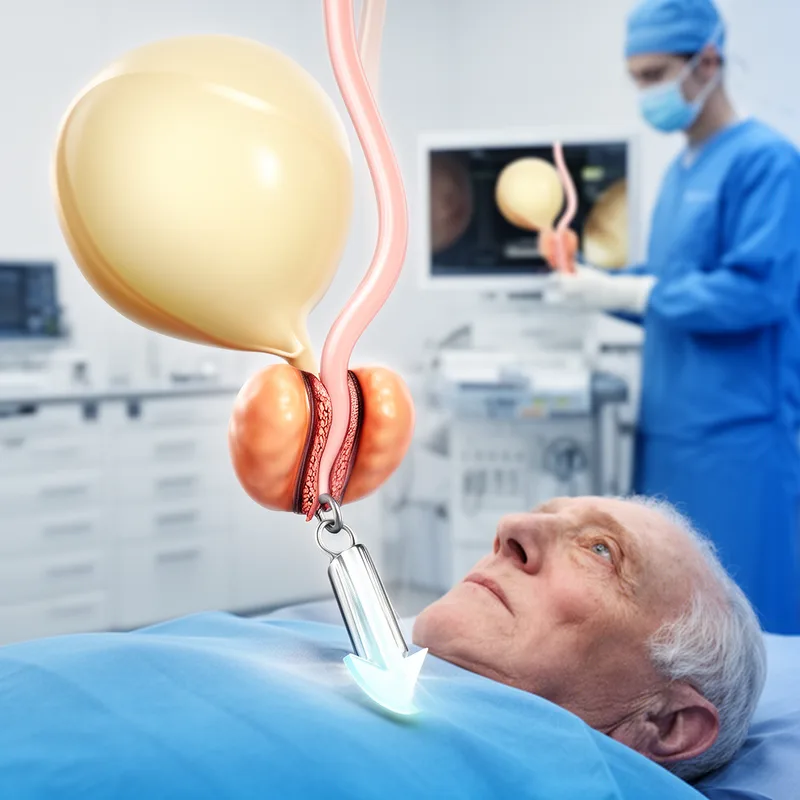
TURP
- noun
- /tɜrp/
- Specialized
- TURP is one of the UK's most common and successful surgical procedures.
- transurethral TURP
- men undergoing TURP
Examples
-
Andersen et al. found the highest ratio of TURP to OP death rates to occur at two years after surgery.
Academic text (1995) -
In 1989, an observational study found TURP to have higher long-term mortality than OP.
Academic text (1995) -
Research shows that patients sexually active before TURP generally remain so afterwards.
Academic text (2012) -
During the 1970s, the technique of TURP improved, and its short-term morbidity was reduced.
Academic text (1995) -
TURP had a lower 30-day case-fatality rate than OP, a similar 90-day rate, but TURP had a higher one-year rate.
Academic text (1995) -
Men having TURP were, on average, slightly younger than those having OP (69.6 and 70.1 yr, respectively).
Academic text (1995) -
The doctor recommended TURP as a treatment option for his enlarged prostate.
-
After discussing the risks, he decided to proceed with the TURP surgery to alleviate his symptoms.
-
Many patients recover quickly from TURP and report an improvement in urinary flow.
Synonyms
 2
8.3
2
8.3

A surgery to remove part or all of the prostate gland in men

An operation that removes prostate tissue through the tube that carries urine to improve urine flow
Surface Forms
Etymology
TURP comes from the medical phrase transurethral resection of the prostate, where trans- means 'through', urethra means 'the urine tube', resection means 'cutting out', and prostate is a 'male gland'. So TURP is the name for a surgery that removes part of the prostate by going 'through' the urethra to help with urine problems.