

Syringa emodi
- noun
- Specialized
- During our hike, we came across a stunning Syringa emodi shrub with its striking pale lilac flowers blooming along the trail.
Examples
-
On our trek through the Himalayas, we spotted numerous Syringa emodi shrubs among the rocky slopes.
-
Botanists noted that Syringa emodi produces a distinctive, somewhat unpleasant fragrance when in bloom.
-
The Syringa emodi is prized in gardens for its hardy nature and unique foliage.
-
The Syringa emodi blooms beautifully in the spring.
-
Have you seen a Syringa emodi in full bloom?
-
The Syringa emodi, found in the mountainous regions of northern India, is known for its upright growth and fragrant, white blossoms.
-
Many gardeners appreciate Syringa emodi for its robust structure and the unique, slightly unpleasant scent of its flowers.
Synonyms
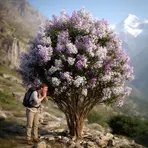
A sturdy shrub from the mountains of northern India with pale purple or white flowers that smell strong
Surface Forms
Morphology
syringa + emodi
This is a Latin binomial (scientific name) where 'syringa' is a genus label for a shrub but 'emodi' is not an English lexical item and is undefined here, so a B1 learner knowing the constituent words would not be able to derive the species-specific meaning (a Himalayan shrub with particular traits). Scientific names operate as arbitrary taxonomic labels and require specialist/Latin knowledge to unpack, making the expression non-compositional for general learners.
Etymology
Syringa emodi may come from old words: Syringa from a term for a hollow stem once used like a 'pipe', and emodi meaning 'of the mountains'. That's why the name fits a tough mountain shrub with pale lilac or white flowers that give a strong, sometimes unpleasant smell.

